Operations | Monitoring | ITSM | DevOps | Cloud

Charting a Course to Clearer Visibility | Discovering Observability: Session 1

As a monitoring professional, you’re responsible for tracking the elements in your infrastructure – regardless of where they live. You have the metrics, you’re collecting the logs, and you’re tracing the most important business processes, so you already have the critical parts required for true infrastructure visibility. But correlating the data, detecting anomalies, and being informed when things go awry is the challenge. Knowing a value is outside a threshold is great, but does that constitute a problem? Thankfully, SolarWinds® Hybrid Cloud Observability is here to give you that next level of insight.


Centralized application management on Kubernetes

A centralized application management approach can help you improve developer productivity and application support times and reduce toil for DevOps teams. This example shows how you can centralize all the necessary information your teams need to support their applications, regardless of the pipeline, IaC, cluster, or GitOps tools used. All in just a few minutes. Resources.

The pandemic has indeed caused a massive spike in cybercrime

Recent events of the pandemic have facilitated a rapid implementation of remote working tools, causing an increase in ransomware attacks – businesses suffer from financial and data losses. In order to prevent such attacks, companies must not only educate their employees about best cybersecurity practices but also embed professional security solutions within the internal business processes and systems.

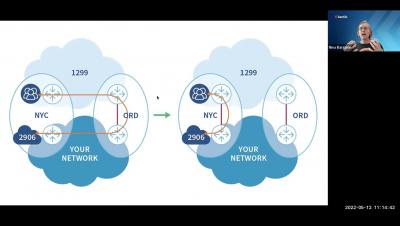
How to Prepare for Peering Partner Business Review

Peering is more than just setting up sessions with any AS that will accept one. Peering can involve long-term relationships that require reviews and joint planning to grow synergy. A critical milestone in any peering relationship is the business review; and when it comes to business reviews, it’s all about preparation. Learn how Kentik can help you get ready to ace business reviews with peering partners. What you’ll learn.

Role-Based Access Control (RBAC) in eG Enterprise

eG Enterprise is a single pane of glass that provides monitoring and oversight of every layer and tier of your IT infrastructure. However, this does not mean every user in the organization has the same view of the IT infrastructure or needs to use the tool in the same way. In fact, controlling a user’s view of the monitored applications and infrastructure, as well as their privileges to perform tasks and access data via Role-Based Access Control, is a critical feature for our customers.

The core pillars for a strong digital fabric

As organizations are embracing digital transformation, it is imperative for them to invest in the right set of frameworks that make the transformation successful for the near term and durable for the long term. Every organization should weave a unique digital fabric taking into account of the sunk cost of its existing technology and new-age solutions.

Enabling enterprise digital experience using digital-first engineering

Prelude to Digital first Engineering: In the blog that we published earlier, we touched upon how enterprises should gear up and adopt strategies. We have mentioned how enterprises should begin to create a unique blueprint for evolving their operations to be digital savvy for an enhanced experience. We explained the approach that will enable enterprises to digitize business processes and how to choose the right digital technologies and processes.

Biggest challenges organizations face while adopting Digital first!

In our preceding blog, we emphasized the growing need for digital experience for businesses and how it can be achieved using Digital first engineering as a discipline. These transformations are strategic and organizations failing to position themselves with the future trends by coping with the customer and market needs will lose the competitive advantage.

Key Digital first technology trends to consider adopting in 2022

In our previous blog, we covered the importance of establishing a Digital first as a discipline. Once the key outcomes of the project are identified, we often stumble upon numerous challenges – the leaders should filter out the associated challenges and risks, to mitigate them and balance out the desired state benefits versus the current state benefits. This will provide better visibility for the teams involved in the transformational process.

How do you measure the success of your Digital first strategy?

We have seen the importance of adopting a Digital first engineering approach, the challenges faced by leaders, and the role of strategies in our previous blogs. Another factor that plays a significant role in the success of any Digital first initiative is having a proper metric system. These huge transformational processes involve a lot of time, resources, and cost - if these are not managed and measured in a timely fashion, enterprises can end up getting a hit on their bottom line.