How to Compare Metrics in Amazon CloudWatch and Datadog | Datadog Tips & Tricks
In this video, you'll learn how to directly compare values from your Amazon CloudWatch console with metrics presented in Datadog.


Cisco Meraki provides a range of IT infrastructure devices—like network security appliances, switches, and wireless access points. As your on-prem infrastructure grows and you add potentially thousands of Meraki devices to your network, it becomes a challenge to get visibility across your entire fleet of devices.
AWS Fargate allows you to run applications in Amazon Elastic Container Service without having to manage the underlying infrastructure. With Fargate, you can define containerized tasks, specify the CPU and memory requirements, and launch your applications without spinning up EC2 instances or manually managing a cluster. Datadog has proudly supported Fargate since its launch, and we have continued to collaborate with AWS on best practices for managing serverless container tasks.
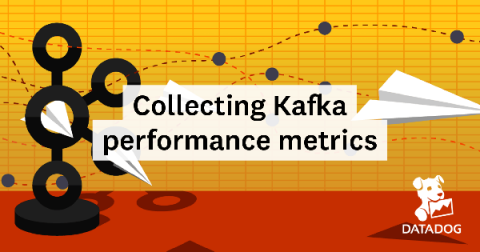
Kafka is a distributed, partitioned, replicated, log service developed by LinkedIn and open sourced in 2011. Basically it is a massively scalable pub/sub message queue architected as a distributed transaction log. It was created to provide “a unified platform for handling all the real-time data feeds a large company might have”.Kafka is used by many organizations, including LinkedIn, Pinterest, Twitter, and Datadog. The latest release is version 2.4.1.
If you’ve already read our guide to key Kafka performance metrics, you’ve seen that Kafka provides a vast array of metrics on performance and resource utilization, which are available in a number of different ways. You’ve also seen that no Kafka performance monitoring solution is complete without also monitoring ZooKeeper. This post covers some different options for collecting Kafka and ZooKeeper metrics, depending on your needs.
Kafka deployments often rely on additional software packages not included in the Kafka codebase itself—in particular, Apache ZooKeeper. A comprehensive monitoring implementation includes all the layers of your deployment so you have visibility into your Kafka cluster and your ZooKeeper ensemble, as well as your producer and consumer applications and the hosts that run them all.
Jenkins is an open source, Java-based continuous integration server that helps organizations build, test, and deploy projects automatically. Jenkins is widely used, having been adopted by organizations like GitHub, Etsy, LinkedIn, and Datadog. You can set up Jenkins to test and deploy your software projects every time you commit changes, to trigger new builds upon successful completion of other builds, and to run jobs on a regular schedule.