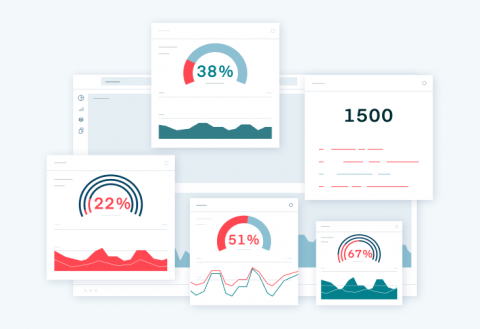
Project managing global software projects is always a challenge, contending with multiple time zones, tools, and teams. In these environments, the day-to-day life of a Project Manager is filled with status collections, project reporting, and little time for much else. While the detail will always matter – like team bug data, feature status, and build progress – there is a better way than collecting and reporting on all this data manually. Does this scenario sound familiar?
Network monitoring is the key to efficient, reliable operation, as well as performance and security. The deeper and more broadly you can monitor (yes, you want to do both), the better your network operates. What if you could combine a superstar in network infrastructure monitoring with the champion of network flow monitoring? You can. Progress, owner of WhatsUp Gold, recently acquired Kemp and their market-leading Flowmon solution.
Site reliability engineers (SREs) play a crucial role in ensuring the reliability of systems. From creating software to improving system reliability in production, responding to incidents, and fixing issues, SREs are responsible for guaranteeing the health of applications.. And observability helps support SREs'. Because an observable system allows them to identify and fix issues promptly, resulting in SRE's being better equipped to fast-track development cycles.
Welcome to the future! SaaS (Software as a Service) rules the world. When just a few years ago businesses were buying software and installing it in-house, now they're renting it. There's a SaaS for everything. Actually, multiple SaaS for the exact same problem! Even technology companies with expert engineering teams are choosing to use off-the-shelf components (now in the form of SaaS) instead of developing in-house. It makes complete sense to buy something that would cost 100x more to develop in-house.
If you’re an InfluxDB user you’ve almost certainly used the join() function. The join() function performs an inner join of two table streams. It’s most commonly used to perform math across measurements. However, now it is deprecated in favor of the join.inner() function which is part of the new join package. With the addition of the join package, Flux now has the ability to perform the following types of joins: A visualization of different types of joins from this article.