Operations | Monitoring | ITSM | DevOps | Cloud

Deploying Redis Cluster on top of Kubernetes

Redis (which stands for REmote DIctionary Server) is an open source, in-memory datastore, often used as a database, cache or message broker. It can store and manipulate high-level data types like lists, maps, sets, and sorted sets. Because Redis accepts keys in a wide range of formats, operations can be executed on the server, which reduces the client’s workload. It holds its database entirely in memory, only using the disk for persistence.

Harness the power of CHAOSSEARCH to understand your users and Amazon ELB log data

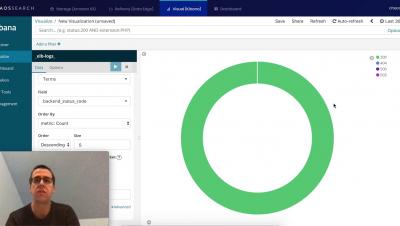
Still trying to make sense of your Amazon ELB Log data? Don't move your logs out of your Amazon S3 account - simply connect CHAOSSEARCH to your S3 Bucket with a Read Only IAM role where we index that data and write the results to your Amazon S3 account.

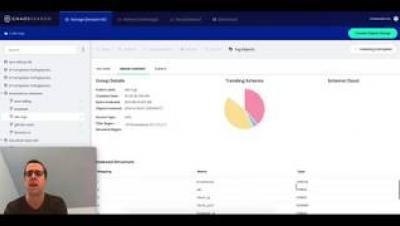
Identify risky cloud behavior in your Amazon AWS Cloudtrail logs with CHAOSSEARCH

Trying to make sense of your AWS Cloudtrail logs? Have you given up hope that you'll ever create an Elasticsearch index mapping to search all that data? Watch as Pete Cheslock dives into some AWS Cloudtrail data to identify risky cloud behavior.

Navigating Network Services and Policy With Helm

Deploying an application on Kubernetes can require a number of related deployment artifacts or spec files: Deployment, Service, PVCs, ConfigMaps, Service Account — to name just a few. Managing all of these resources and relating them to deployed apps can be challenging, especially when it comes to tracking changes and updates to the deployed application (actual state) and its original source (authorized or desired state).