Operations | Monitoring | ITSM | DevOps | Cloud

Create MySQL tasks easily

Databases are a critical component of our systems and their malfunction can affect business productivity. Therefore, we must make sure that they are working correctly. PandoraFMS has a plugin that allows the remote monitoring of MySQL databases through a Discovery task, by means of this task we can obtain information about the performance and status of the database, such as the number of connections, the availability of the database, the number of queries that are being made, buffer status and cache status, among other types of information.

Monitoring Amazon SageMaker with Datadog

Amazon SageMaker is a fully managed service that enables data scientists and engineers to easily build, train, and deploy machine learning (ML) models. Whether you are integrating a personalized recommendation system into your video streaming application, creating a customer service chatbot, or building a predictive business analytics model, Amazon SageMaker’s robust feature set can simplify your ML workflows.

Defining Your Cloud Core Migration Strategy - Fail to Prepare, Prepare to Fail

In this enlightening panel discussion from the Telco Core Strategy Summit, industry experts discuss the intricacies of cloud core migration. Learn from seasoned professionals, including Kentik’s Justin Ryburn, as they share insights on cloud migration challenges, the importance of automation, and strategies to maintain security and performance. Understand the significance of detailed planning, the shifting dynamics of workloads in the cloud, and how to navigate the complexities of this transformative journey.

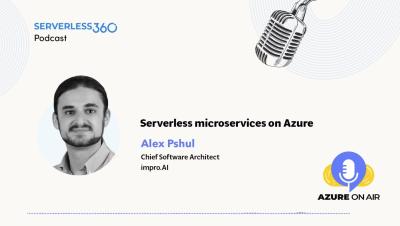
Serverless Microservices on Azure

Serverless Microservices combines both Serverless and Micro-Service Architectures, which gives the advantage of scalable Loosely coupled services without managing physical servers. In this episode of "Azure on Air" podcast, learn how serverless microservices in Azure offer reduced complexity, cost savings, and faster innovation. Discover Azure's core serverless service, Azure Functions, and other managed services that enable full-fledged serverless applications.

Microsoft Fabric Explained: All you need to know

What is Microsoft Fabric? Microsoft Fabric is an end-to-end analytics solution with full-service capabilities including data movement, data lakes, data engineering, data integration, data science, real-time analytics, and business intelligence—all backed by a shared platform providing robust data security, governance, and compliance.

How to SSH into Docker containers

A Docker container is a portable software package that holds an application’s code, necessary dependencies, and environment settings in a lightweight, standalone, and easily runnable form. When running an application in Docker, you might need to perform some analysis or troubleshooting to diagnose and fix errors. Rather than recreating the environment and testing it separately, it is often easier to SSH into the Docker container to check on its health.

Navigating Multi-Cloud Environments: Managing Deployments with Ease

Multi-cloud seems like an obvious path for most organizations, but what isn’t obvious is how to implement it, especially with a DevOps centric approach. For Cycle users, multi-cloud is just something they do. It’s a native part of the platform and a standardized experience that has led to 70+% of our users consuming infrastructure from more than 1 provider.

The importance of Azure cost to DevOps

Cloud computing’s ascent has redefined modern business operations. Azure, among other platforms, offers unparalleled scalability, speed, and resilience. However, this vast potential brings about the challenge of cost management. Although DevOps teams traditionally focus more on deployment and uptime, addressing Azure costs is essential. Here’s why.

Syslog Tutorial: How It Works, Examples, Best Practices, and More

Syslog is a standard for sending and receiving notification messages–in a particular format–from various network devices. The messages include time stamps, event messages, severity, host IP addresses, diagnostics and more. In terms of its built-in severity level, it can communicate a range between level 0, an Emergency, level 5, a Warning, System Unstable, critical and level 6 and 7 which are Informational and Debugging. Moreover, Syslog is open-ended.