Operations | Monitoring | ITSM | DevOps | Cloud

Native SQL Server Backup Types and How To Guide

When a disaster occurs, the ability to successfully restore SQL Server databases is fundamental for avoiding data loss. It’s not enough to rely on hardware and software technologies to replicate data because these technologies can go wrong or there can be multiple failures during a disaster, meaning you have to rely on backups to recover. SQL Server allows multiple types of backups, and a multitude of options to use with those backups.

SQL Server Storage Best Practices: Choosing Storage Options

Storage is one of the most critical components for any relational database management system, and getting the right storage configuration affects reliability, availability, and performance. When it comes to SQL Server storage best practices, choosing between storage hardware options has changed significantly over the last decade, but that doesn’t necessarily make choosing the correct storage options for SQL Server any easier.

Troubleshooting the Internet: If You Can't Have Authority, Visibility Will Do

The vast majority of businesses aren’t all on-premises or all-cloud, but rather in some form of hybrid IT middle ground. That means “who owns the system” (and a closely related issue: “who owns the problem”) continues to be a thorn in the side of many IT pros. In this conversation, SolarWinds Technical Content Manager for Community Kevin M. Sparenberg and Head Geek Leon Adato break down some ways technical teams can get around the lack of authority needed to solve problems and keep critical services up and running.

Boss-Level Log Management for WordPress Site Administrators

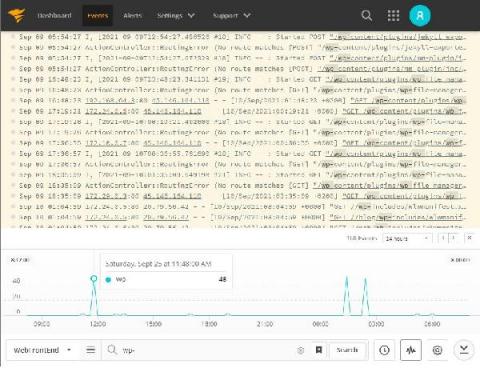
WordPress is the most dominant content management system (CMS) in the enterprise website market today. Its open-source nature, thousands of plugins, and wide adoption by commercial hosting providers have bolstered its success. In addition, it’s highly compatible with other website technologies like web servers, database servers, or middleware.

The Questions You Should Ask Your Software Providers

Software providers everywhere are under attack by cyber threat actors. Whether it’s a ransomware, the latest zero-day exploit, or a highly sophisticated, well-resourced, and persistent supply chain like SUNBURST, our entire industry faces an increasingly treacherous threat landscape, and nearly every news day brings with it another wave of announcements and urgent system updates to be made.

Is Application Sprawl in Government Really a Big Problem?

When considering whether to add more applications or monitoring components to your IT system, the answer should always be quality over quantity. Agencies often fall into the trap of application sprawl by adding more and more to their systems—more applications, more tools—without realizing this actually has the potential to reduce system effectiveness. Instead of simply adding more apps, consider instead interoperable ones, or ones you can plug into a common platform.

All About Network Topology-Types and Diagrams

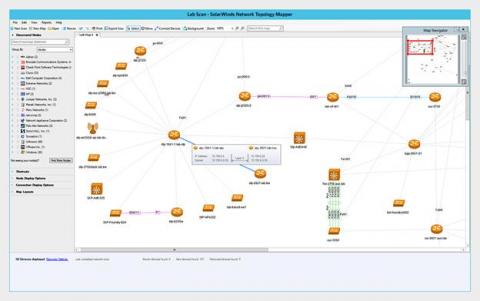
Every network has a specific collection of nodes and links that connect them. The arrangement of those nodes and links, or the network topology, informs performance, maintenance costs, and more. You should know the network topology models in use today when designing or managing a network, including the ring, mesh, bus, star, and tree topologies.

Controlling Cloud Cost Requires a Change in IT Financial Perspective

For IT practitioners, cloud can initially seem like a candy store where everything is enticing and delicious and cheap enough to seem free. What they don’t realize is how quickly costs can add up or be amplified when cloud options are opened to teams across the organization. In this video, SolarWinds Technical Content Manager for Community Kevin M. Sparenberg and Head Geek Leon Adato discuss the need for IT professionals to become more proficient in speaking the language of business and seeing cloud solutions from more than just a technology perspective.

5 Best Tools for Log Collection and Archiving With Guide

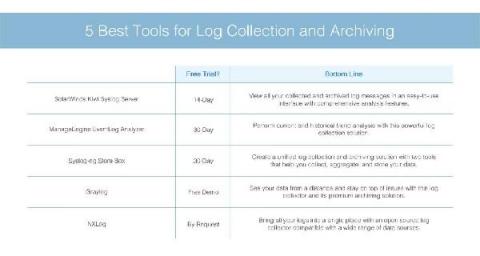
Collecting and archiving logs is an essential practice for any organization looking to maintain the performance and security of their network. Logs are like a diary for your devices. They record every message sent from any of your network systems. This information can prove essential for everything from understanding the daily activities of your infrastructure, to improving functionality across your platforms, to identifying and troubleshooting issues.