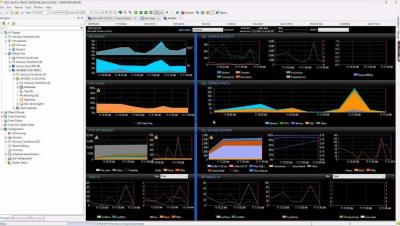
SolarWinds DBA xPress is a free tool that simplifies administering large SQL Server data estates, enabling data teams to compare, synchronize, and manage schema and data across databases and servers.
Today, SolarWinds announced our expanded database performance management portfolio. With the recent acquisition of SentryOne and launch of Database Insights for SQL Server alongside our award-winning Database Performance Analyzer (DPA) and Database Performance Monitor (DPM) solutions, we intend to become the leader in the database performance management market.
The launch of The SolarWinds Query Report 2021: Database Priorities and Pitfalls reveals increasing complexity in managing database performance, mounting pressure for tech pros.
SolarWinds Database Mapper is a cloud or on-premises solution designed to simplify the documentation process. The intuitive interface makes it easy to navigate and compare documentation and lineage across multiple data sources.
You’re going to run into network issues during normal operations—in part because so many kinds of errors can cause noticeable problems in your network. Identifying the root cause of each issue is critical and to do so successfully, you want to make sure you have the right network troubleshooting solutions in your arsenal before wading in. This helps ensure you have a clear understanding of the scope of the problem before you attempt any network troubleshooting steps.
Traditional systems monitoring solutions poll various counters (typically simple network management protocol [SNMP]), pull in data and react to it. If an issue requiring attention is found, an event is triggered—perhaps an email to an administrator or the firing of an alert. The admin subsequently responds as needed. This centralized pull approach is resource-intensive. Due to the pull nature of the requests, it results in data gaps and data that may not be granular enough.
SolarWinds Database Performance Monitoring and DataOps solutions are designed to solve the most complex performance and management issues regardless of where your databases or the applications they support reside.
Welcome back! As we enter the halfway point of this five-part series, we’ll discuss Level 3 of the capability maturity model (CMM) and the role it plays in helping DBAs grow their organization and increase the functionality of their business. By now you should be familiar with the definition of CMM and the Information Maturity Model (IMMM). If you need a refresher, part one and two of this series cover the basics of the models and the overall benefits of following a maturity model.