Operations | Monitoring | ITSM | DevOps | Cloud

Kubecost Vs. OpenCost: What's The Difference? (Updated 2026)

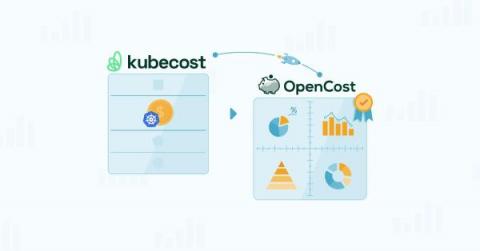
Kubernetes (K8s) adoption has exploded over the past few years. But it hasn’t been easy to monitor, manage, and optimize K8s costs. To provide greater cost visibility into Kubernetes clusters and environments, Kubecost launched in 2019 and was acquired by IBM in 2024, while OpenCost debuted in 2022. OpenCost has several founding contributors. But Kubecost developed the cost allocation engine that the OpenCost implementation uses.

I Fixed a $30K/Year Anomaly in the Time It Takes to Make Coffee

If you work in FinOps, you know the feeling. You open your recommendations queue on a Monday morning. There are 47 items. You worked through 12 of them last week. You’re back up to 47 again. All represent real money leaving the building, but not all are “bad money” – of those 47, a significant share will be “this is ok, expected, we got value”. That’s what really kills FinOps enthusiasm (and is why the engineer is skeptical towards the FinOps person).

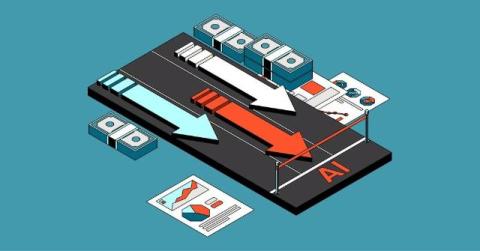
The SaaS Paradox: Why Companies Must Spend More On AI To Survive

At SaaS Metrics Palooza 2025, CloudZero CEO Phil Pergola delivered a keynote on the software industry’s most pressing question: can SaaS survive the AI revolution, or will AI rewrite the SaaS playbook outright? Phil’s answer wasn’t doom and gloom, but he didn’t sugarcoat the challenges. “Churn rates are up,” he told moderator Ray Rike of Benchmarkit on Oct. 9, 2025. “The payback from a customer acquisition cost perspective is taking longer.

How Much Does It Cost To Keep Up With The AI Joneses?

I’ve been an engineering leader for over a decade, and I’ve spent most of those years in private Slack groups with other engineering leaders, comparing strategies and kvetching about Kubernetes. Of the hundreds of threads I’ve taken part in, the one that got the most engagement the fastest was a recent one around AI adoption. “Where are you on this continuum?”, it read. “A. You don’t really care how people use AI; B. You push people to use AI; or C.

AI Cost Management: How To Track, Allocate And Optimize AI Spend

AI cost management is the practice of tracking, allocating, and optimizing the cloud infrastructure costs tied to building, running, and scaling AI workloads. It differs from traditional cloud cost optimization because AI infrastructure behaves differently at every layer of the stack. The biggest problem isn’t overspending. It’s that most organizations can’t see where their AI spending is going.

AWS VPC Peering Vs. Transit Gateway: Which To Choose And Why [2026]

VPC peering can be simple and cost-effective in smaller setups. For growing multi-account platforms, Transit Gateway can offer predictable structure and centralized governance. But that’s not all. AWS VPC peering connects two VPCs directly with no hourly fee — simple and cost-effective at small scale, but it creates an unmanageable mesh as your VPC count grows.

Jensen Huang's warning: lead the AI transition - or finance it

The wrong people got the most attention from Jensen Huang’s comments last week. Huang told the All-In Podcast that he’d be “deeply alarmed” if a $500,000 engineer consumed less than $250,000 in AI tokens annually. Within 48 hours, the discourse collapsed into a compensation debate.

CloudZero Brings Cloud Cost Intelligence to 13 AI Coding Tools - Cursor, Copilot, and More

Earlier this month, we announced the CloudZero Claude Code Plugin and the CloudZero AI Hub — the first step toward putting your cloud cost data directly inside the AI tools your team already uses. The feedback from customers was clear. They said engineers and FinOps teams wanted more tools and more ways to get answers from CloudZero without switching context. Today, we’re delivering more.

What Are AI Inference Costs? [And How To Manage Them]

If you’re building or running AI-powered features in production, you need a clear understanding of inference costs. Get it right, and you can turn your AI investments into profitable growth. As Larry Advey, Director of Cloud Platform and FinOps at CloudZero and a member of the FinOps Foundation Technical Advisory Council, puts it: “AI investments will only continue to grow.

10 Best Snowflake Monitoring Tools (Updated 2026)

Snowflake is a cloud data platform designed for large-scale analytics, data warehousing, and data processing. It allows teams across an organization to run multiple data workloads on a single platform without managing infrastructure. Snowflake’s architecture is also unique. Compute and storage are completely independent and highly elastic. However, Snowflake’s per-second pricing and elastic compute model make costs highly sensitive to usage.

How Vibe Coding A Self-Help App Made Me An AI Believer

For longer than I’m proud of, I was an AI skeptic. Then, over the holidays, I vibe coded an app whose sole purpose was to make me a better person. The app is a motivator. It’s programmed to send me timely reminders along certain themes, like reading every day, making healthy eating choices, and giving myself plenty of time to plan for anniversaries and birthdays.

NVIDIA's Jensen Huang just described your next big cost problem

On March 18, Jensen Huang took the stage at NVIDIA’s GTC conference in San Jose for a keynote that ran well over two hours — covering everything from CUDA’s 20-year history to humanoid robots that may one day wander Disneyland. But buried inside the spectacle was a remarkably clear-eyed articulation of the economic forces now bearing down on every enterprise that builds on cloud infrastructure.

FinOps Leaders Who Will Win The AI Era Are Already Experimenting

Engineering teams are shipping faster than ever. AI coding tools like Claude Code and OpenAI’s Codex have quietly removed some of the biggest friction points in the development cycle — and the result is that FinOps teams are being asked to keep up with a pace most practitioners haven’t fully reckoned with yet. That acceleration has a cost consequence. More shipping means more services, more experiments, more infrastructure spun up without review cycles.

FinOps In Action Playbook For Engineering Personas

In 2025, many teams built strong FinOps foundations: These practices created visibility and control. Now it’s time to elevate. FinOps in Action is a three-part series focused on applying that foundation in real engineering scenarios. Each post highlights a different persona and shows how to move from visibility to operational discipline. Today, we focus on Engineering. Engineering teams influence cost through architecture decisions, scaling policies, and workload design.

Amazon Lex Pricing in 2026 Explained (And Practical Cost Saving Tips to Use Immediately)

If your SaaS product handles 1 million chatbot interactions per month, Amazon Lex alone could cost between $4,000 and $7,500. That range assumes current Amazon Lex V2 pricing of about $0.00075 per text request and $0.004 per speech request. Multiply the requests by the rate, and you’re done. Or are you? Conversational AI services rarely behave that neatly in production — and that includes AWS Lex. Amazon Lex is AWS’s conversational AI service for building chatbots.

Webinar Recap: Building The Finance Function For The Future

Women leaders from CloudZero, Campfire, and Preql AI sat down to talk about what it actually takes to modernize finance in 2026 — AI spend, smarter tooling, and the skills that matter now for finance practitioners and executives looking to manage cloud and AI spend in a rapidly changing and unpredictable financial environment. On March 19, 2026, CloudZero and Campfire co-hosted a virtual panel in honor of International Women’s Month, called Building the Finance Function for the Future.

How A Finance Director Found $30K/Month In AI Savings In 10 Minutes

A real workflow showing how Claude + CloudZero MCP turns plain-English questions into actionable cost intelligence — no dashboards, no tickets, no waiting As Director of Finance and Accounting at a software company, my job can be described simply: Understand what we’re spending, who’s responsible, and whether we can get more efficient. But as anyone who’s had to wrangle AI costs knows, doing so for AI is anything but simple.

5 AI And Cloud Cost Problems That Are Now Everyone's Problem

Not long ago, cloud cost was an engineering problem. FinOps teams owned it, finance leaned in occasionally, and everyone else stayed out of it. Now, that’s changed. AI changed who has skin in the game. CFOs get asked about it in board meetings. CEOs field questions on earnings calls. The audience for cloud cost management has exploded — and that means the conversation CloudZero is built to enable isn’t only a technical one, it’s a business one.

Code Optimization: The Cloud Always Collects Its $2,000 Tuition Fee

We hear a lot of war stories from the teams we work with. Horror stories about cloud bills, surprise overages, and the infrastructure decisions that seemed perfectly reasonable at the time. This one comes from Erik Dasque, CTO at Allure Security. It involves a junior developer, a Kubernetes CronJob, and a recurring bill that, if not caught, would have happened on a yearly basis.

AWS App Runner: How It Works, Pricing, And Best Practices For Cost Optimization Today

Back in May of 2021, containers had already won. Kubernetes adoption was surging. ECS and EKS were powerful. But for many teams, deploying a simple containerized web service still meant stitching together clusters, networking rules, scaling policies, load balancers, IAM roles, and CI/CD pipelines. It felt heavier than it should. Developers no longer wanted more orchestration power. They wanted less operational drag.

How CloudZero Measures Cost Per Customer (Step By Step)

Like most SaaS companies, CloudZero uses its own product. When we released cost per customer reporting, we tested it on ourselves first. And today, we use cost per customer reports regularly. Why? Because they help leadership answer board and renewal questions, including customer-level margins. Cost per customer is valuable and hard to get right. Multi-tenant systems and Kubernetes can hide the link between shared infrastructure (like EC2) and the customers using it.

The Best FP&A Software For 2026: 21 Tools To Know

Modern FP&A tools help SaaS businesses analyze financial performance in real time, forecast accurately, and align spend with business priorities — especially cloud spend, which can quickly spiral without visibility. Choosing the right FP&A tool for your business means understanding what you actually need it to do — whether that’s cloud cost visibility, more accurate forecasting, or tighter alignment between finance and engineering.

3 Simple EC2 Cost Optimization Strategies That Actually Work

Amazon Web Services (AWS) has been the leader in cloud computing for more than 10 years. Despite a decade of innovation, no AWS service encapsulates cloud computing principles better than Elastic Compute Cloud (EC2). Through EC2, AWS can offer flexible and scalable virtual infrastructure that can be ‘rented’ to run applications and workloads.

Webinar recap: FinOps In The AI Era - A Critical Recalibration

In March 2026, CloudZero’s Ben Austin, Director of Product Marketing, sat down with Ray Rike, Founder and CEO of Benchmarkit, to walk through findings from FinOps in the AI Era: A Critical Recalibration, a joint survey of nearly 500 organizational leaders on how they’re managing or, rather, struggling to manage AI costs.

Practice Vs. Performance: Two Reports On The State Of FinOps

This month, two FinOps research reports landed in close proximity. One from the FinOps Foundation — their 6th annual State of FinOps, drawing on a broad global practitioner community. One from CloudZero: FinOps in the AI Era: A Critical Recalibration, built on responses from 475 senior leaders at cloud-mature, AI-active organizations, with a focused lens on how AI is reshaping cloud cost management. Read each alone, and you get a useful snapshot for your business.

Inside Pandora's Box: How CloudZero AI Hub Cracks Cloud Cost Intelligence

Years in the FinOps trenches taught me one thing: The data has never been the problem. The data exists. It’s out there, scattered across provider invoices, buried in tagging gaps, locked behind dashboards that maybe three people in your org actually know how to navigate. The real problem? Nobody can get to it when they need it. Engineers ship features without understanding what they cost the business, let alone whether they improved margin.

Inference Economics: What It Is And Why It Matters Now

Somewhere between a model’s first demo and its first production workload, the cost conversation changes completely. Training is a big number, but it’s a finite one. Inference isn’t. Every user interaction, every query, every API call triggers compute behind the scenes — and unlike training, inference never stops billing. That shift from one-time expense to ongoing operational cost is where inference economics begins.

CloudZero Launches Claude Code Plugin To Bring Cost Intelligence Into Engineering Workflows

Today we’re announcing the CloudZero Claude Code Plugin, a new capability that puts CloudZero’s full cost intelligence model directly inside Claude Code, where engineers and technical FinOps practitioners already work. The plugin connects a Model Context Protocol (MCP) server and nine pre-packaged investigation skills to CloudZero’s cost data, covering cloud and AI spend across AWS, GCP, Azure, Snowflake, MongoDB, OpenAI, Anthropic, and more.

What Is Lift And Shift? Is It Right For You?

Cloud migration strategies range from quick rehosting to complete application refactoring. Lift and shift migration (also called rehosting) moves applications from on-premises to the cloud with minimal changes, promising speed and lower initial costs compared to other strategies. But does lift and shift actually deliver long-term savings? This guide examines when lift and shift makes sense, when it creates hidden costs, and what alternatives exist.