Operations | Monitoring | ITSM | DevOps | Cloud

The latest News and Information on Containers, Kubernetes, Docker and related technologies.

Lessons Learned from Accidental Open Source Success with Ryan Clements

In this video, Ryan Clements from Byte Bot shares his experience integrating Storybook and Next.js. Discover the lessons he learned about automation, documentation, and open-source community engagement. Whether you're a developer or interested in software engineering, this talk offers valuable insights.

Integration roundup: Monitoring the health and performance of your container-native CI/CD pipelines

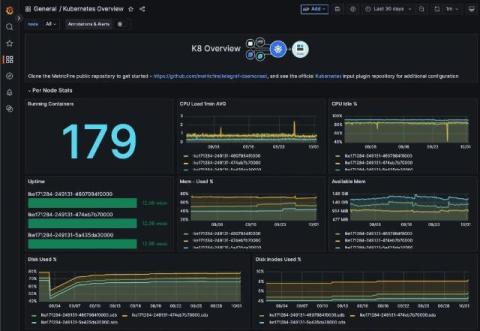
Widespread adoption of containerized infrastructure has been closely followed by an explosion of container-native tools for each layer of the stack, including new solutions for managing CI/CD pipelines in container-based environments, such as the Argo suite, FluxCD, and Tekton. This is because these lightweight solutions make it easier to automate builds, testing, deployments, and more on Kubernetes, as well as other platforms that manage containerized workloads and services.

Most Common Migration Complexities When Moving From Heroku to AWS

When planning a migration from Heroku to AWS, it’s essential to grasp the complexities inherent in transitioning from a managed Platform as a Service (PaaS) like Heroku to the intricacies of Infrastructure as a Service (IaaS) provided by AWS. This shift demands not just an adaptation to a different architectural framework but also a strategic approach to overcome operational and technical challenges that can significantly affect both performance and cost efficiency.

The Hidden Costs of PaaS: Everything You Should Know

In the past decade, Platform as a Service (PaaS) has revolutionized the way companies deploy and manage applications. With promises of scalability, operational ease, and cost efficiency, PaaS attracted myriad businesses looking to leverage cloud technologies and reduce time to market. However, as these platforms have matured, many organizations have realized that PaaS, while powerful, is not without its pitfalls.

Core CI/CD Concepts: A Comprehensive Overview

In the fast-paced world of software development, the ability to quickly and reliably deliver software is paramount. This need has led to the evolution of CI/CD—Continuous Integration, Continuous Delivery, and Continuous Deployment—practices that streamline and automate the development lifecycle. Below, we explore these core CI/CD concepts and related automation practices that are transforming the software industry.

Testing and Quality Assurance Within a CI/CD Pipeline

In today’s fast-paced software development landscape, the need to deliver high-quality software rapidly and reliably is paramount. Continuous Integration (CI) and Continuous Delivery/Deployment (CD) have emerged as essential practices that enable development teams to meet these demands. Central to the success of CI/CD pipelines is a robust framework for testing and quality assurance (QA).

Shaping Tomorrow - Civo's Vision and the Future of Technology with Dinesh Majrekar

Join Civo CTO Dinesh Majrekar as he explores the future of technology and Civo's vision. His talk covers key industry trends, including the impact of the Silicon Valley Bank collapse, Broadcom's acquisition of VMware, and the rise of AI technologies like ChatGPT. Discover insights on sustainable growth, hybrid cloud environments, and the importance of sovereign clouds and green energy. Stay informed about the evolving tech landscape and how Civo is shaping tomorrow.

Rancher Live: Building for the edge

The rise of Edge deployments has changed the landscape of problems that enterprises face. The growing importance of zero-touch provisioning at the edge has caused a shift in how downstream workloads are deployed and configured. Low bandwidth and air-gapped scenarios have complicated the existing provisioning workflows, shifting the configuration burden from a post-deployment solution to the base image.

Mastering kubectl Scale Deployment: A Comprehensive Guide for Developers

Kubernetes has revolutionized how developers deploy, manage, and scale their applications. One of its key features is the ability to scale deployments seamlessly. This article explores various aspects of using the kubectl scale deployment command, including how to scale deployments up and down, scale all deployments in a namespace, managing replica sets, and more.