Operations | Monitoring | ITSM | DevOps | Cloud

The latest News and Information on Containers, Kubernetes, Docker and related technologies.

Tips for Monitoring Kubernetes Applications

Monitoring is the most important aspect of infrastructure operations. Effective monitoring strategies help optimize infrastructure usage, improve planning, and resolve incidents quickly. While monitoring preceded DevOps, DevOps has further transformed the software development process to the extent that monitoring also has to evolve.

Monitoring Kubernetes with Hosted Graphite by MetricFire

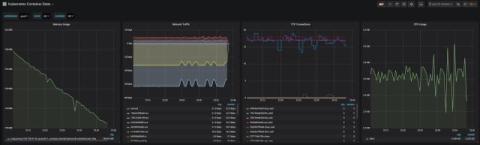
In this article, we will be looking into Kubernetes monitoring with Graphite and Grafana. Specifically, we will look at how your whole Kubernetes set-up can be centrally monitored through Hosted Graphite and Hosted Grafana dashboards. This will allow Kubernetes Administrators to centrally manage all of their Kubernetes clusters without setting up any additional infrastructure for monitoring.

Monitoring a K8s Cluster with MetricFire

Kubernetes (K8s) is a popular container orchestration solution, but monitoring its performance can be quite challenging. Luckily, there's a solution that makes it easier - MetricFire. It's a cloud-based monitoring and visualization platform that provides comprehensive metrics, alerts, and dashboards for K8s clusters. The platform offers amazing cloud-based monitoring and visualization services that can make the K8s monitoring seamless.

Tips for Monitoring Kubernetes Applications Test

Monitoring is the most important aspect of infrastructure operations. Effective monitoring strategies help optimize infrastructure usage, improve planning, and resolve incidents easily. While monitoring preceded DevOps, DevOps has further transformed the software development process to the extent that monitoring has to evolve as well.

Using K8S But Not Overhauling Your Devops Processes

Kubernetes is now the industry standard for cloud-based organizations. Slowly, many enterprises and mid-level companies are adopting it as the default platform for managing their applications. But we all know Kubernetes adoption has its challenges, as well as its associated costs. How do we decide when and what to migrate to Kubernetes? Does migrating to Kubernetes mean overhauling all DevOps processes? Adopting K8S should not lead to an overhaul of your DevOps process - it should complement it.

How to monitor your Kubernetes metrics server

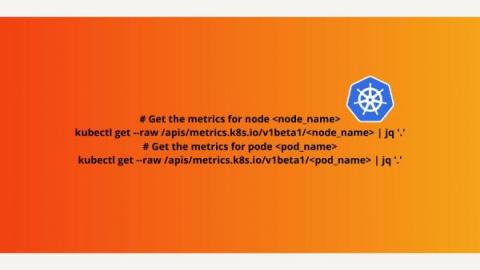
In this article, we will examine a Kubernetes metrics server and its uses. We will also learn how to set one up and use it to monitor Kubernetes metrics. Finally, we will explore using Hosted Graphite by MetricFire to monitor Kubernetes metrics. To easily get started with monitoring Kubernetes clusters, check out our tutorial on using the Telegraf agent as a Daemonset to forward node/pod metrics to a data source and use that data to create custom dashboards and alerts.

3 Key Strategies for End-to-End DevOps Automation

DevOps automation is essential for speeding up delivery, minimizing errors, and boosting team collaboration. But selecting the right approach can make or break your organization’s agility and scalability. Let's break down three key approaches—DIY with Infrastructure-as-Code (IaC), Platform-as-a-Service (PaaS), and DevOps Automation Platforms—so you can identify the best strategy for your needs.

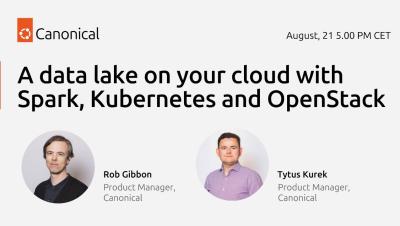
A data lake on your cloud with Spark, Kubernetes and OpenStack

Data lake is a very large scale data processing paradigm that disrupts the conventional data warehousing model. Data lakes can offer greater flexibility whilst retaining the benefits and efficiency of centralised data governance. With Canonical OpenStack private cloud platform, Kubernetes and Charmed Spark solutions, your data lake architecture can also benefit from extended flexibility and scalability whilst remaining cost effective to operate.