Operations | Monitoring | ITSM | DevOps | Cloud

The latest News and Information on Containers, Kubernetes, Docker and related technologies.

Survey Says: COVID-19 is Threatening On-prem Environments

COVID-19 is leading to large-scale migrations away from on-premises environments, according to Codefresh’s second annual State of DevOps survey that revealed this and other surprising insights into the continued evolution of the industry. At the same time, DevOps automation continues to expand in scope and complexity with more and more processes becoming automated, and more involved technologies like Kubernetes continuing to gain strong traction.

What's new in Kubernetes 1.19?

Kubernetes as a project is maturing, support has been increased from nine to 12 months, and there’s a new protocol in place to ensure a steady progress on feature development. Also, many of its new features are meant to improve the quality of life of its users, like Generic ephemeral inline volumes, or the structured logging.

How to Secure the network of your GKE Cluster

By default, pods are non-isolated; they accept traffic from any source. The Google GKE solution to this security concern is Network Security Policy that lets developers control network access to their services. Google GKE comes configured with Network Security Policy using Project Calico which can be used to secure your clusters. This class will describe a few use cases for network security policy and a live demo implementing each use case.

The Power of Open Source Software: Rancher Academy Issues 1,000th Certificate

The Rancher Academy launched on May 15, 2020. Here we are, 94 days later, and we’ve issued our 1,000th certificate to a graduate of the Certified Rancher Operator: Level 1 course. Rancher is open source software, so anyone can download it and use it. With that freedom, though, comes a cost: we all learn how to use it according to how we need to use it. Through this lens, the actual potential of Rancher becomes distorted, and the experience of each individual varies widely.

Explore Kubernetes resources with Datadog Live Containers

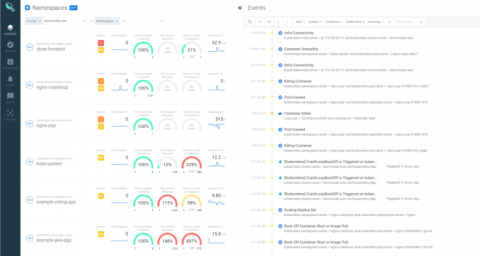
Running Kubernetes applications requires visibility into not only the overall performance of clusters but also the health of individual pods, deployments, and other resources that make up your environment. Datadog already integrates with your containerized environments and includes features like the Live Container view and the Container Map, enabling you to easily monitor Kubernetes and container runtime performance in real time and get deep visibility into clusters.

MicroK8s HA

MicroK8s is Canonical’s lightweight Kubernetes, that allows for Kubernetes to be installed on any machine in under 60 seconds. Initially, microK8s was a single K8s cluster project, however as users grew to love this easy-to-deploy distribution, Canonical now enables them to create small K8s clusters for higher scalability. Watch this video to witness yourself how easily you can run a command, create your K8s cluster, and run it in an instance using microK8s.

Hybrid Cloud Kubernetes: Connecting the dots with Azure Arc-enabled Kubernetes

Canonical has recently teamed up with Microsoft, to enable Kubernetes users to manage multiple K8s clusters from a single platform - Azure Arc. Even if you’re not a Microsoft user, you can attach any on-prem or public cloud Kubernetes cluster to Arc, and manage them from a centralised point. In this demo, watch how to administrate multiple and different K8s clusters with Canonical’s distributions of Kubernetes and Arc.

Sysdig 2020 Container Security Snapshot: Key image scanning and configuration insights

Today, we are excited to share our Sysdig 2020 Container Security Snapshot, which provides a sneak peak into our upcoming 2020 Container Usage Report As containers and Kubernetes adoption continue to increase, cloud teams are realizing they need to adopt a new workflow that embeds security into their DevOps processes. Secure DevOps, a variation of DevSecOps, embeds security and monitoring throughout the application lifecycle, from development through production.

3 Ways Cluster Sprawl Creates Significant Waste and Risk For Your Organization

As various teams within your organization are discovering new ways to leverage Kubernetes, they’re adopting a growing number of clusters to support their project efforts. Unfortunately, this is where many of the challenges begin. While managing one Kubernetes cluster is not trivial, trying to manage multiple Kubernetes clusters across multiple environments becomes exponentially more difficult.