Operations | Monitoring | ITSM | DevOps | Cloud

The latest News and Information on DevOps, CI/CD, Automation and related technologies.

It's time to rethink the way you do external comms

April was a month to remember at incident.io. Not only did we attend our second conference ever with KubeCon in Amsterdam, but we also very subtly released our brand-new Status Pages product. OK, it probably wasn't subtle. Both moments required months of preparation, feedback loops, iteration, and so much more behind-the-scenes work to get right. So if you ran into us at KubeCon, thank you for stopping by and meeting with our team.

Cloud Capacity Planning Is a Hit-or-Miss Exercise That Mostly Misses

The goal of capacity planning is to match resources with demand. There are essentially three outcomes from this analysis. You can underestimate the resources you need (underprovision), which can hurt performance. You can overestimate (overprovision), which adds unnecessary costs. Or you can get it just right (rightsized). And, of course, you want to be rightsized at the lowest possible cost. Because many factors go into cloud capacity planning, it can feel like more of an art than a science.

Sponsored Post

What is Platform Engineering and Why Does It Matter?

In the era of cloud-native development, as businesses rely on a growing number of software tools to enable agile application delivery, platform engineering has emerged as a crucial discipline for building the technology platforms that drive DevOps efficiency. In this blog post, we explain the growing importance of platform engineering in high-performance DevOps organizations and how platform teams enable DevOps efficiency, agility, and productivity.

Sponsored Post

Scaling Site Reliability Engineering Teams the Right Way

Most SRE teams eventually reach a point in their existence where they appear unable to meet all the demands placed upon them. This is when these teams may need to scale. However, it's important to understand that increasing team capacity is not the same as increasing the number of people on the team. Let's unpack what scaling a team is all about, what are the indicators, what are steps you can take, and how you know if you're done.

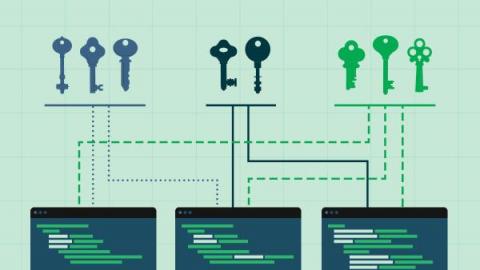
Static credential management for platform engineers

Cloud CI/CD is a force multiplier for development teams, especially those working remotely. Automated CI/CD takes load off of developers, allowing them to focus on building better products. Hosted CI/CD adds further benefit to this, ensuring that this newfound capacity isn’t spent managing the testing and deployment infrastructure, and that remote team members have easy access to CI/CD tools.

Whisper Data Migration to the Cloud

In the modern business landscape, the recent surge in cloud computing has become a game-changer, fundamentally altering how organizations manage their IT infrastructure. As businesses increasingly embrace digital transformation, migrating services and applications to the cloud has emerged as a crucial factor in guaranteeing scalability, flexibility, and cost efficiency.

Part II: A Journey of a Thousand Binaries - The Challenges with Software Dependencies

In part one of this series, we looked at what is a dependency, different types of dependencies, and their benefits in our code. In part two, we’ll look at the risks of using dependencies. Whenever we add a dependency we are increasing the risks of any software development cycle.

How to prove your SDLC is being followed for compliance with medical standards like IEC 62304

If you’re part of a software engineering team in digital health, medtech, medical devices, Software as a Medical Device (SaMD), etc. you have to comply with regulatory standards. And one of the biggest challenges engineering leads have in this sector is figuring out what they have to do to achieve software delivery compliance.

How Cloud Native Can Reduce the Cost of Machine Learning

As engineers, we tend to pride ourselves on building a production-first mindset and operational excellence. According to a recent survey, 74% of executives believe that AI will deliver more efficient business processes, while 55% think that AI will help develop new business models and create new products and services. However, the reality is that 85% of ML projects fail to deliver, and 53% of machine learning prototypes don't make it to production.