Connecting Apache Kafka and Aiven for ClickHouse
Aiven for Clickhouse® Learn how to perform analytics with fast response time over huge volumes of data without the need to downsample data.


Mickael Alliel 5 Min read September 20th, 2022 DevOps Kubernetes
Digital twins have become somewhat of a buzzword in the past couple of years. But what exactly are they? A digital twin, as its name indicates, is a non-physical copy of a physical object. Just like a digital scan of a physical picture. This virtual element enables a real-time view of all relevant data coming from said object. Depending on the system being studied, specific sensors can be tracked and monitored.
It’s not surprising that most failures are caused by a change somewhere in a system, such as a new code deployment, configuration change, auto-scaling activity or auto-healing event. As you investigate the root cause of an incident, the best place to start is to find what changed. To understand what change caused a problem and what effects propagated across your stack, you need to be able to see how the relationships between stack components have changed over time.
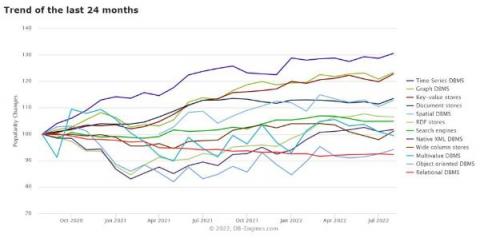
Databases are often the biggest bottleneck when it comes to application performance. Over the years a number of new database designs have emerged to help with not only basic scalability and performance but also to help improve developer productivity and make building certain types of applications easier. That isn’t to say these new databases are magical — there are always trade-offs being made and certain things are sacrificed for gains in other areas.
Everybody is starting to look more at object storage to deliver on data lake initiatives, and S3, specifically Amazon S3, is the gold standard for that. In addition, we’ve heard from many of you that setting up S3 as a destination is a must when starting with Cribl Stream. So in this article we’ll walk you through the setup.
The concept of containerization helps you run applications as lightweight virtual machines. As a web developer, setting up local development environments can be tiresome. However, using tools like Docker and Kubernetes gives developers an upper hand to quickly set up and deploy applications. This guide uses Docker to deploy a React app to Kubernetes.
Observability is one of the most critical ways to improve visibility and control over complex software systems. If you've ever wondered how observability differs from monitoring, then this guide will explain some of the key differences between these two popular concepts.