Early this month, Microsoft will host the second part of its Ignite conference aimed at IT professionals and developers. The livestreamed event, which begins on March 2, will feature a number of exciting trends in technology innovation, but the industry has its sights on one element in particular: a presentation on mixed reality.
Microsoft Azure has just announced the details of its new Azure Arc Validation Program, aiming to further increase customer confidence in deploying Arc enabled Kubernetes in production workloads, and at scale.
It’s been noted that there are two types of organizations – those that have suffered a data breach, and those that will fall victim to a data breach sooner than later (most likely sooner). The hard truth of this statement is reflected in the fact that according to some sources 97% of networks will experience a security compromise over any given six-month period. And with a staggering 9.7 billion data records having been breached since 2013, these numbers are only rising.
AWS Fargate provides a way to use AWS container orchestration services—Amazon Elastic Container Service (ECS) and Amazon Elastic Kubernetes Service (EKS)—without needing to provision and maintain the infrastructure that runs your containers. Fargate is similar to serverless container platforms from Google (Cloud Run) and Microsoft (AKS virtual nodes).
In Part 1 of this series, we showed you the key metrics you can monitor to understand the health of your Amazon ECS and Amazon EKS clusters running on AWS Fargate. In this post, we’ll show you how you can: You can use Amazon CloudWatch and related AWS services to gain visibility into your ECS clusters and the Fargate infrastructure that runs them.
In Part 1 of this series, we looked at the important metrics to monitor when you’re running ECS or EKS on AWS Fargate. In Part 2 we showed you how to use Amazon CloudWatch and other tools to collect those metrics plus logs from your application containers. Fargate’s serverless container platform helps users deploy and manage ECS and EKS applications, but the dynamic nature of containers makes them challenging to monitor.
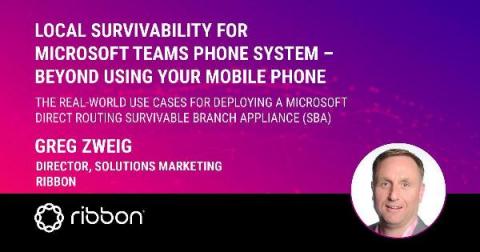
Microsoft Teams is everywhere. Not surprisingly, during the pandemic, the number of daily active users for Teams increased to 75 million in 2020. More and more people are WFH and companies are becoming virtual. Personal meetings are fading now, and Teams poises to become the next best collaboration tool. According to a Riverbed study, 64% of US employees are now working from home because of the Covid pandemic. In turn, Microsoft Teams optimization has become a critical topic for Operations and Network personnel.
Amazon Web Services is a comprehensive, well-supported cloud service that is continuously growing and evolving. As cloud technology continues to boom, enterprises all across the globe are increasingly depending on cloud service providers to manage their workloads, data, and applications.