

Operations | Monitoring | ITSM | DevOps | Cloud

Stop Fighting Your Mouse: How I Traded "Drafting Slavery" for Real Restaurant Design

I've spent the better part of twelve years in the hospitality design trenches. If there's one truth I've brought back from the front lines, it's this: the soul of a restaurant is decided long before the chef ever steps into the kitchen. It's won or lost in your Restaurant Floor Plan.

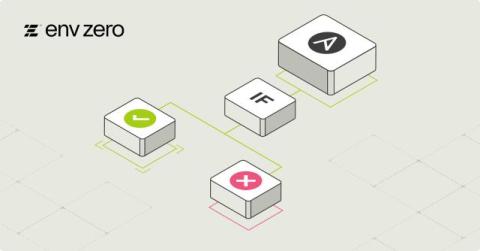
Ansible Conditionals: Complete Guide to when Statements [2026]

Last updated: April 2026 Playbooks that run every task every time aren't really automation. They're scripts. Real playbooks make decisions: only restart a service when its config changed, only install a package on Debian hosts, only send an alert when a prior task failed. That decision-making comes from Ansible conditionals.

From Static Response to Dynamically Adaptive Resilience

Organizations face an overwhelming mix of digital disruptions: service outages, security incidents, infrastructure failures, all happening faster and with greater complexity than ever before. At the same time, expectations have changed. It’s no longer enough to detect issues quickly or simply notify the right people. The real challenge is what happens next. How do you move from signal to action fast enough, coordinated enough, and with the right decisions at every step?

Fast AI Feedback Loops with Honeycomb and OpenTelemetry

Are you writing agentic applications, but aren’t sure what the agents are doing? Finding out too late that you've blown the budget with super expensive models? Not sure where the agents are failing, and feeling a loss of control? Could they do better? Observability is the visibility you need to get the job done. Sending telemetry to Honeycomb explains what your agents are actually doing.

An introduction to the GitOps Catalog

One of the challenges teams face as their platforms grow is how to standardize what gets deployed without slowing teams down. The GitOps Catalog from Konstruct is designed to solve this by providing a consistent way to distribute reusable infrastructure modules, application components, and full environment stacks across clusters. At a glance, it looks like a templating system.

Why your ecommerce dev team ships slower than your competitors (and how to fix it)

Key takeaway: Development velocity in e-commerce is often throttled not by headcount, but by invisible infrastructure friction that forces developers to spend time on environment management and deployment pipelines instead of shipping revenue-generating features. Ecommerce teams rarely think they have an infrastructure problem.

From Edge to Enterprise: How Litmus and InfluxDB Are Modernizing the Industrial Data Stack

Today at Hannover Messe, InfluxData is announcing a strategic partnership with Litmus to address one of the most persistent challenges in industrial data: getting reliable, contextualized telemetry from the shop floor into production systems. Litmus bridges the gap between OT systems and modern IT infrastructure, while InfluxDB serves as the industrial data hub, giving organizations both real-time operational visibility and enterprise-scale historical analysis in a unified architecture.

AppSignal x Hatchbox: Affordable Hosting, Full Visibility

Affordable hosting has always been a puzzle. Heroku made deploying Rails apps simple, but with Salesforce at the helm, active development has stalled. Many developers are left wondering what comes next, locked into a platform that is no longer moving forward. Chris, the founder of GoRails, felt that same frustration. That is why he built Hatchbox. Hatchbox handles your deployments, runs on servers you own, and keeps costs predictable. No dyno management, no add-on sprawl.