Operations | Monitoring | ITSM | DevOps | Cloud

How digital experience monitoring (DEM) tools improve both customer and employee journeys

Outstanding digital experiences are becoming a basic requirement in today's digital economy rather than a distinction. From initial discovery to post-purchase assistance, customers demand smooth, personalized journeys that fulfil their expectations and flow naturally via each touchpoint. Employees need the tools and information to support these experiences effectively.

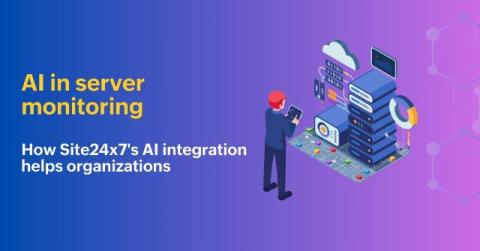
AI in server monitoring

AI is what automation used to be: the latest problem-solver. Organizations have rallied their teams to integrate AI into their workflows to quadruple the efficiency quotient—and it's already started to yield results. As organizations increasingly rely on complex server ecosystems, traditional monitoring methods often struggle to kee pace with the volume and complexity of data generated. AI can be a star player here.

Identifying and fixing deadlocks in Java

A deadlock occurs when two or more threads are continuously blocked after waiting for the same resources. In other words, Thread A is waiting for a resource held by Thread B, while Thread B is also waiting for a resource held by Thread A. This creates a loop of blocking, causing the application to become unresponsive.

Tackling geographic discrepancies in user experience for mid-market businesses with real user monitoring

Middle market businesses operate in a unique space—they need to do more with less. Whether you’re running an e-commerce store, a SaaS platform, or a service-based website, customers of mid-market businesses expect fast-loading pages and smooth interactions—no matter where they are. Creating a seamless digital experience is essential for customer retention and revenue growth. But here’s the challenge: Website and application performance aren’t the same everywhere.

From detection to resolution: The DEM workflow

Like finicky eaters, customers look for a smooth, satisfying meal with each course fulfilling their needs. A slow server, a confused menu, or a process hiccup all take away from the entire experience. Companies require a strong tool, such as digital experience monitoring (DEM), to not only spot the problems but also to promptly fix them. Similar to the kitchen manager eagerly acquiring ingredients and presenting the food, the site owner makes sure everything goes well without a hitch.

5 strategies to reduce false alerts in server monitoring

There are two types of alerts you don't want: We call these false alerts. As a person with responsibility over your IT infrastructure, it is natural that you have configured your monitoring systems to alert you at every step. But when these false alerts take up too much of your time, one of these unfortunate scenarios may occur: Let's explore more about false alerts before we dive into five strategies to avoid them.

The critical role of Kafka monitoring in managing big data streams

Apache Kafka is the backbone of modern data streaming architectures, enabling real-time data movement, stream processing, and event-driven applications at scale. It enables high-throughput messaging between data sources and analytics platforms, supports log aggregation, and facilitates scalable extract, transform, load (ETL) pipelines for continuous data transformation and storage.

DEM 101: Understanding and implementing digital experience monitoring

A faulty engine in a high-performance car; how disappointing can that be? The same is the case of a slow-loading, poorly performing webpage for any digital entity. All that the page can gain will be a group of tired and irritated customers and a loss of trust in the brand. Modern businesses need a fast, reliable, and seamless digital experience. Proactive monitoring of the user experience—understanding how users interact with all digital touchpoints—is vital.

The importance of benchmarking in digital experience monitoring

Having a smooth and effective online experience is now essential rather than a differentiation. Customer loss, damaged brand reputation, and eventually a sharp decline in profitability can all result from a subpar digital experience. Gaining a significant competitive edge and promoting ongoing improvement are two benefits of knowing how your digital experience compares to industry best practices.

The ultimate guide to cloud-native application performance monitoring with AWS, GCP, and Azure

The rapid adoption of cloud-native applications has revolutionized how businesses innovate, scale, and optimize costs. These applications leverage microservices, containers, and serverless functions, allowing seamless collaboration across multiple platforms like AWS, GCP, and Azure. However, managing performance in such a distributed environment presents challenges such as latency, security risks, and cost-inefficiencies.