Operations | Monitoring | ITSM | DevOps | Cloud

Automating the employee offboarding experience

For the past year, the unprecedented movement of workers leaving jobs and switching career paths (aka the Great Reshuffle), has been top of mind for most organizations. Although losing talent is largely inevitable and a natural part of any company’s ongoing evolution, many organizations are recognizing the velocity of employee exits as one of the greatest risks they face today. To assess your organization’s risk, answer these questions.

Introducing Shipa Insights

If you are on Shipa Cloud today, you will have noticed a new module called Insights. We are pleased to announce the initial release of Shipa Insights and certainly have a lot in store as we continue to build out the module. As more items continue to shift left towards the developer and the rise of the full lifecycle developer continues to occur, outside of technical non-functional requirements such as connectivity, reporting and metrics are also important.

When Does a Problem Become an Incident?

Incident management is a practice that seeks to resolve business-impacting events in the most efficient manner possible. But not every problem that arises requires an incident response, and it’s crucial that teams know the difference between a problem and an incident. Responding to problems may be part of daily routines, or small ad hoc projects that don’t require more than one resource or a significant time commitment.

Quickly Turn ALB/ELB Status Codes into an Issue-Seeking Heatmap

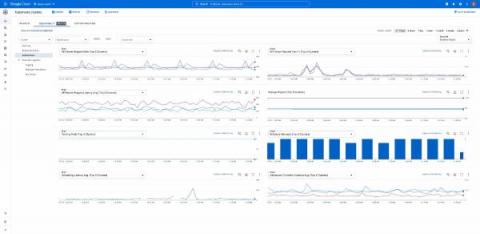
More often than not, as developers, when we get a report that a large customer is hitting 502 errors, there's a flurry of activity. What's wrong? Is something deeply broken? So you start digging through AWS logs to see what you can find, but it's hard to reproduce. Sometimes, there's no clear answer, and you move on without any resolution. What if I told you it doesn't have to be this way?

How Can a Transformational Leadership Style Benefit IT?

It’s been twenty years since the corporate scandals of Enron, WorldCom, and Tyco. The collapse of these giant corporations ruined the lives of the employees who tirelessly worked for leaders who let greed dictate their decision-making. Laws have been implemented since then to help reduce the risk of another Enron, but laws won’t stop all instances of poor leadership. Poor tone at the top increases vulnerabilities, employee non-compliance, and job dissatisfaction.

Monitoring COVID-19 virus levels in wastewater using Grafana, Databricks, and the Sqlyze plugin

The new Sqlyze data source plugin (in beta) allows you to connect your Grafana instance to all your favorite SQL databases, many NoSQL databases, and many other non-SQL data sources — from document databases, to ERP systems, to even Slack. You don’t have to know the native query syntax for these data sources; you can just use SQL. The Sqlyze plugin uses ODBC at its core. Hundreds of ODBC drivers are available for various databases/data sources.

Application logging with Flask

Without logs, or a good understanding of them, debugging an application or looking through an error stack trace can be challenging. Luckily, Flask logging can change the way you understand debugging and how you interact with logs produced by the application. The Flask logging module gives you a way to record errors over different severity levels. A default logging module is included in the Python standard library, and it provides both simple and advanced logging functions.