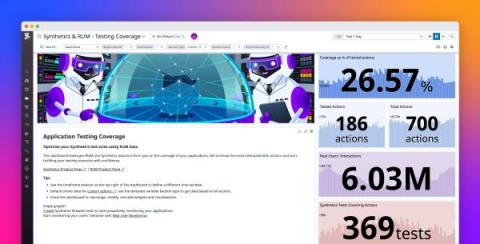
When you think of software testing, what comes up first? For many developers, unit tests and integration tests are often top of mind. Both software testing methods are vital to writing and maintaining a high-quality production codebase. But they are not sufficient on their own. Your team’s testing practice should assess the entire application, observe the larger story of how it operates when functioning correctly, and raise alarms when deviations are found.
Monitoring performance is a critical part of software development. We just released version 3.0.0 of our Sentry Android Gradle plugin, which brings a handful of auto-instrumentation capabilities to Android developers, featuring Room and SQLite queries performance, File I/O operations performance, and more.
Slowdowns caused by system disruption and complexities in your IT environment are more than an operational headache. They can have a direct impact on the bottom line. While it’s enormously important to make IT systems more efficient and give time back to the organization, it’s just as important to recognize the value of that time and understand the best ways to allocate it between workers, apps, and infrastructure.
We´re proud of our many customers and users around the globe that trust Icinga for critical IT infrastructure monitoring. That´s why we´re now showcasing some of these enterprises with their Success stories. It´s stories from companies or organizations just like yours, of any size and different kinds of industries. Some of them are our long-standing customers, others have just recently profited from migrating from another solution to Icinga.
In this blog, we will be introducing where and how clusters are currently being deployed, what these deployment methods enable, and the major players in that space. This blog is a part of a series of blogs on HPC where we will introduce you to the world of HPC.
Picture this: Your on-call engineer gets an alert at 2 AM about a system outage, which requires the entire team to work hours into the night. Even worse, your engineering team has no context of where the issue lies because your systems are too distributed. Solving the problem requires them to have data from resources that live in another timezone and aren’t responsive. All the while, your customers cannot access or interact with your application, which, as you can imagine, is damaging.