Operations | Monitoring | ITSM | DevOps | Cloud

Cloud cost management and optimization: How to regain control over your bill

The cloud is today one of the most expensive resources for any modern organization, second only to employee salaries and overhead. According to recent research by Gartner, end-user spending on public cloud services will reach $396 billion in 2021 and grow 21.7% to reach $482 billion in 2022. By 2026, Gartner predicts public cloud spending will exceed 45% of all enterprise IT spending, up from less than 17% in 2021.

Observability and SaaS Providers

SaaS is exploding and so it should; it takes commoditized work and infrastructure away from tech teams so that they can focus on differentiating features. But what happens when it goes wrong? How do SaaS platforms make sure they aren't letting their customers down and in turn, letting their customers down? Observability, bolstered with AI gives all the partners the best chance to optimize availability and customer experience. Here's how.

A Developer focused CI/CD pipeline for Kubernetes

As Kubernetes becomes the key target environment across many organizations, it automatically becomes an essential topic for developers. However, Kubernetes was created for operations and, unless you spend a considerable amount of time learning and specializing yourself, it is still challenging to use. Developers should rather focus on delivering applications instead, and a developer or application-focused platform is needed to enable that.

Driving Unified Visibility within Modern Digital Environments

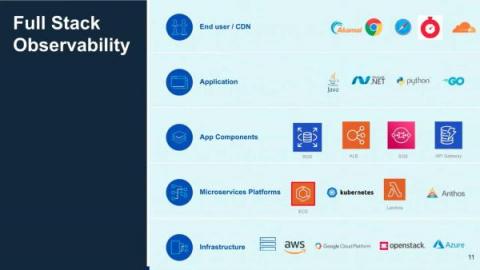
Operational monitoring can be like looking down the wrong end of a telescope. There’s no clear picture of the horizon. Everything is blurred, indistinct, and difficult to trace. If you’re relying on traditional, domain-centric monitoring, you’re faced with a similar problem: you can see the performance of individual elements, but you don’t have any visibility into the broader picture.

Monitor Salesforce's Real-Time Events with Splunk

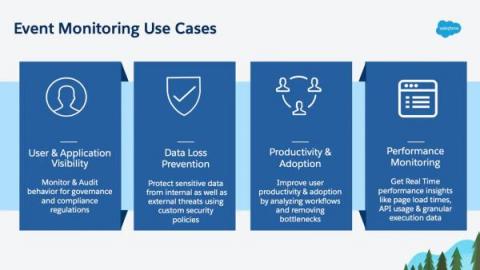
In 2019 Salesforce announced the general availability of Real-Time Event Monitoring (RTEM) which includes 19 different events that help monitor & secure your Salesforce data. Real-Time Event Monitoring stores events for 6 months as Salesforce Big Objects and streams events via Salesforce’s Streaming API in near real-time.

How to improve customer engagement: Use conversational messaging

How we communicate with each other has changed, thanks in large part to rapidly evolving technology. Every day, we spend time online and on our smartphones. We’re accustomed to rich messaging with family and friends using images, videos, and emojis to help make our point and highlight our meaning. We also communicate asynchronously, meaning when we have time and it’s convenient for us.

The Kids are Connected: Ensuring Connectivity in Education Networks

Connectivity is more important than ever to support our education system. BYOD, remote classes, Wi-Fi, and a variety of digital learning solutions are now just part of the equation. Education IT teams have a big task: making sure educational service delivery remains uninterrupted while balancing the constraints of limited budgets, staff, and time to support digital transformation that can keep up with modern demands.

User experience is a focus of Sumo Logic Observability innovations

Technology environments are rapidly evolving as organizations look to remain competitive, accelerate innovation and make themselves more agile. But in the process, many of the observers, i.e., stakeholders who track infrastructure and application metrics, are falling behind, unable to monitor and manage modern, cloud-native apps and multi-cloud environments due to the complexity that comes with them.

Best Practices to Monitor Node.js Performance

Built on the V8 JavaScript engine of Chrome, Node.js is a very lightweight, open-source framework with minimum modules. And since it is an asynchronous system by default, it is faster than most other frameworks. DevOps still need Node.js monitoring to ensure performance better than other frameworks. In order to understand how relevant Node.js still is, note that PayPal, Reddit, LinkedIn, Amazon, Netflix and other high-use, high-visibility service providers use the framework.