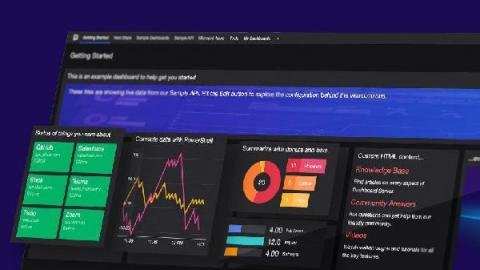
Amongst all the cool features of SquaredUp Dashboard Server, the coolest kid on the block is probably the PowerShell tile. The reason is simple – PowerShell is easy, it’s awesome, and it’s powerful! You can not only retrieve data from the source (like the APIs), but you can also manipulate that data, work with variables, loop it, filter it, and use it in whichever way works the best. Like they say, the things PowerShell can do are only restricted by the proficiency of the user.
Enterprises are using Unified Communications as a Service (UCaaS) solutions like Microsoft Teams and Zoom, and Contact Center as a Service Solutions (CCaaS) like Five9 and Genesys to improve communications, simplify operations, and accelerate IT agility. As the COVID-19 outbreak clearly demonstrated, UCaaS and CCaaS solutions are ideal for delivering enterprise communications services to remote workers, mobile users, and small/home offices.
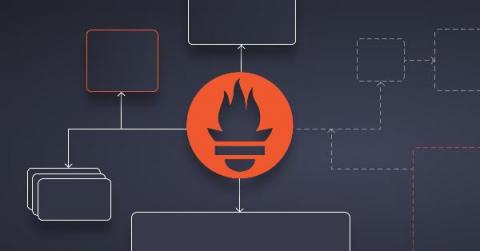
When building distributed, scalable cloud-native apps containing dozens or even hundreds of microservices, you need reliable monitoring and alerting. If you’re monitoring cloud-native apps in 2021, there’s a good chance you’ve chosen Prometheus. Prometheus is an excellent choice for monitoring containerized microservices and the infrastructure that runs them — often Kubernetes.
Enterprises are using Unified Communications as a Service (UCaaS) solutions like Microsoft Teams and Zoom, and Contact Center as a Service Solutions (CCaaS) like Five9 and Genesys to improve communications, simplify operations, and accelerate IT agility. As the COVID-19 outbreak clearly demonstrated, UCaaS and CCaaS solutions are ideal for delivering enterprise communications services to remote workers, mobile users, and small/home offices.
You probably can’t believe I’m asking that question. It’s like showing up to a party and immediately asking about the afterparty. Is it really time to look for the exit? No…but yes. We used to deploy apps on systems in data centers. Then we moved the systems to the cloud. Then we moved the apps to containers. Then we wrapped it all in Kubernetes for orchestration, and here we are. Each advance in technology unlocks doors we couldn’t reach before.
Large portions of software development budgets are dedicated for testing code. A new component may take weeks to thoroughly test, and even then mistakes happen. If you consider software defects as security issues then the concern goes well beyond an application temporarily crashing. Although even minor bugs can cost companies a lot of time to locate the bug, resolve it, retest it in lower environments, then deploy it back to production.
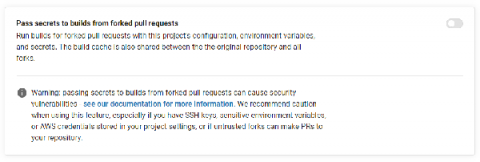
In our previous post, we discussed the recent security incident at Codecov and the following investigation at Mattermost. As a follow-up to that we wanted to share some of the basic design principles as well as a handful of more technical tips and tricks around CI/CD pipeline security that helped Mattermost come out of the incident unscathed.