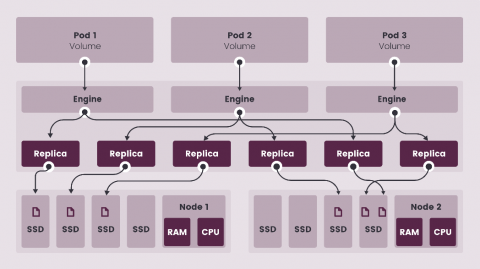
Today I am very excited to announce that Rancher Labs’ Project Longhorn has been accepted by the Cloud Native Computing Foundation as a sandbox project. Many Kubernetes users still find it challenging to run stateful workloads and manage persistent storage. Longhorn aims to help you manage stateful workloads in Kubernetes by providing a solution for persistent storage that you can easily deploy, use, and manage.
We’re excited today to release the Sysdig 2019 Container Usage Report. Continued momentum for Kubernetes and greater adoption of cloud-native architectures are changing not just usage patterns, but processes and organizational structures as well. One of the surprising insights this year is the 2X increase in the number of containers that live for less than five minutes. As services grow more dynamic, cloud teams are recognizing the need to integrate security into their DevOps processes.
In this blog post, you’ll learn how to setup image scanning for Azure Pipelines using Sysdig Secure DevOps Platform. Azure DevOps gives teams tools like version control, reporting, project management, automated builds, lab management, testing, and release management. Azure Pipelines automates the execution of CI/CD tasks, like building the container images when a commit is pushed to your git repository or performing vulnerability scanning on the container image.
Amazon RDS allows you to easily run databases in AWS without actually having to manage database servers. Since your databases are critical to the health of your application, properly monitoring RDS is a top priority for most teams. In this blog post, we will go over how Blue Matador monitors RDS automatically and without configuration.
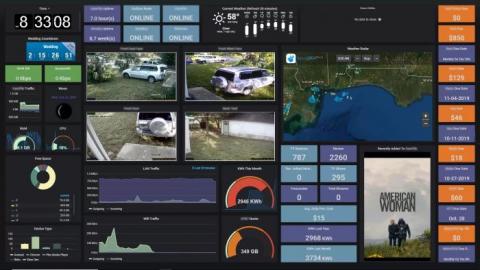
We saw Cameron’s impressive dashboard in a Grafana Experts Facebook group and asked him to break it down for us. When friends and visitors see my personal home dashboard in my kitchen, they’re normally of the opinion that it’s “really neat” and looks “impressive.” Often that’s what they take away from it. It’s “cool”… and as much as that may be true, that is not its purpose.
The first product to let you build live, interactive 360° dashboards that give you complete visibility of your cloud-hosted applications. Today is the start of an exciting new chapter at SquaredUp. The biggest release in the history of our company – SquaredUp for Azure – is now live!
Released in 2009, MariaDB is a popular open-source fork of the MySQL relational database management system. MariaDB is intended as a drop-in replacement for MySQL, so data and table definitions, protocols, structures, and connectors require little to no modification in order to migrate. MariaDB also contains several enhancements, including faster indexes and cache, increased connection thread pools, and support for more storage engines.
We often get questions about optimizing or monitoring Sidekiq. Monitoring is kind of our game, but optimizing Sidekiq’s performance is a different ball game altogether. In reality, optimizing is complex, but let’s start by looking at the seemingly simple answers…
In particular, I liked very much the article that our colleague Sara Martin wrote in Pandora FMS blog about crisis management in information technology, these are the steps: Legend: “Jack’s Lantern (https://commons.wikimedia.org/wiki/File:Jack-o-lantern.svg) This article starts from point number five: when after a certain time of recovery the crisis has been solved and becomes a post mortem incident. This word comes from the Latin language and it means “after death”.