Operations | Monitoring | ITSM | DevOps | Cloud

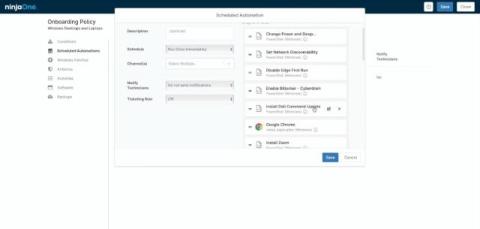
Applying USB-based, Zero-touch Device Provisioning with NinjaOne

Modern provisioning in IT refers to defining your desired settings and software to meet your organizational goals. It’s the process of setting up your IT infrastructure, including hardware, networks, and virtual machines, among others, to make it available to systems and users. Device provisioning is a subset of this, often used to set up devices within the Internet of Things (IoT), including mobile devices. The importance of device provisioning cannot be overstated.

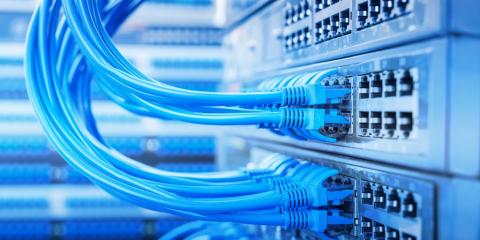
Why a Well-Organized Server Rack is Crucial for IT Efficiency

In today's digital age, the backbone of any successful business lies in its IT infrastructure. At the heart of this infrastructure lie server racks, the unsung heroes of data centers worldwide. But why is a well-organized server rack so crucial for IT efficiency? Let's explore the significant impact proper rack organization can have on your entire IT operation.

Understanding Network Management Services: Key Components and Benefits

Network management plays a vital role in the modern IT structure, it is a range of toolkits and applications designed to maintain and improve the online community. Network management services ensure that the network operates smoothly and supports continuous data transmission and interchange within corporations.
Sponsored Post

5 Security Logging and Monitoring Mistakes to Avoid

As cybersecurity attack vectors evolve, security logging and monitoring are becoming even more important. Effective logging and monitoring enables organizations to detect and investigate security incidents quickly. Cloud-based attackers are getting more sophisticated, and often rely on stolen credentials to escalate privileges and move laterally within corporate IT networks. Many do so undetected, which is why modern IT systems require a watchful eye on log data to detect suspicious activity and inform incident response efforts.

What is APM: Understanding the basics of application performance management

Application performance management (APM) is a crucial practice that entails closely monitoring, measuring, and enhancing the performance and availability of software applications to meet desired levels of service. This involves continuously keeping an eye on application performance and effectively addressing any complex issues that may arise, in order to guarantee optimal functioning and meet the expectations of end users.

Practical Guide to Adopting Open-Source Software in Operations

Businesses are constantly on the lookout for ways to optimize operations, reduce costs, and stay ahead of the competition. One of the most effective strategies for achieving these goals is adopting open-source software (OSS). Open-source tools offer a myriad of benefits, from cost savings to enhanced flexibility and innovation. However, transitioning to an open-source environment can be daunting without a clear roadmap.

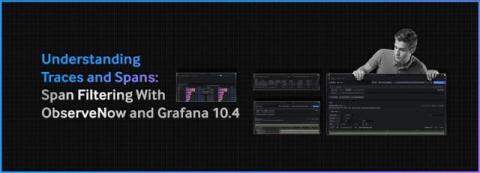
Understanding Traces and Spans: Span Filtering With ObserveNow and Grafana 10.4

ObserveNow, the leading open source-based observability stack, has recently enhanced its capabilities with the introduction of Span Filtering – a key feature in its latest upgrade to Grafana 10.4. This advancement significantly improves the platform’s ability to dissect and analyze traces, which are crucial for understanding the behavior and performance of distributed systems.

10 Best VS Code Extensions for Web Development, According to Redditors

When it comes to improving your coding workflow, Visual Studio Code (VS Code) extensions are a fan favorite among devs worldwide. Well-known extensions like Prettier for code formatting, ESLint for identifying and fixing problems, and Live Server for launching a local server are fantastic, but there are plenty of hidden gems offering unique features these popular tools don’t cover. We turned to Reddit to find out which lesser-known VS Code extensions the community’s talking about.

Observability and incident response need resilience testing

There’s a reason why observability and incident response practices have become standard across modern software development. Anyone wanting to minimize downtime and deliver reliable, available applications needs to have fully instrumented systems and playbooks so they can respond quickly and effectively to outages or incidents. But there’s another piece to the reliability puzzle: resilience testing.

Container Orchestration: A Comprehensive Guide

Containerization has deeply changed the way applications are built, deployed, and managed. Containers include both an application and its dependencies, enabling consistent and efficient deployment across diverse environments. However, as applications scale and become more complex, managing numerous containers manually becomes increasingly challenging. Container orchestration streamlines the deployment, scaling, and management of containerized applications.