Operations | Monitoring | ITSM | DevOps | Cloud

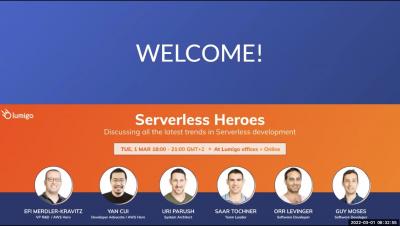
Serverless Heroes Discuss The Latest Trends in Serverless Development

***Please note that the audio turns on at the 45 second mark*** How Lumigo Monitors Its Production Monitoring your production is challenging. Lumigo processes more than 1.5B Lambda invocations per month and digests 25TB of data monthly. Many things can go wrong. In this session, I will explain how Lumigo operates its production from tools to processes.


Cycle Podcast | Episode 11 "Rising Cloud + Cycle.io" Featuring Sean Brown, Chief Product Officer

In this episode, Jake Warner chats with Sean Brown of Rising Cloud. Discussions include some background and an overview on Rising Cloud, Stateful vs. Stateless, and how both companies are coming together to solve developer-centric needs.

How certificates work in Puppet

This video gives you a basic introduction to certificates and explains how they’re used to secure Puppet communications. Certificates help to provide secure connections between different parts of your infrastructure as those parts communicate with each other. When you run the agent for the first time, it submits a CSR (Certificate Signing Request) to the primary server. Then the CSR is reviewed by the Puppet administrator and either accepted or denied.

KoolKits - Highly-opinionated, batteries-included Kubernetes debugging toolkits

KoolKits (Kubernetes toolkits) are language-specific container images that contain a (highly-opinionated) set of tools for debugging applications running in Kubernetes pods. You can read more about the motivation behind this project here. Those images are intended for use with the new kubectl debug feature, which spins up Ephemeral containers for interactive troubleshooting. A KoolKit will be pulled by kubectl debug, spun up as a container in your pod, and have the ability to access the same process namespace as your original container.

Distributed Tracing and Suspect Spans

At the root of every performance issue is, there is most often a single event that creates a domino effect of excruciatingly slow load times. With distributed tracing, we give you all the context to see what actually matters and help you solve what’s urgent faster. However in some cases, you might want or like really need a short cut. And this is where Suspect Spans come into play.