



















Irvine, CA, USA
2008
  |  By Derek Pascarella
Most conversations about service desk automation stay at the strategy level for too long. Capability checklists and evaluation frameworks matter, but they won’t show you what the platform does when something breaks at 2 AM, or what happens when a single incident crosses four team boundaries before it can close. These scenarios show where simpler platforms start to give way. Teams usually automate the clean, single-system work first.
  |  By Derek Pascarella
The platform has been live for six months. Workflows are running, the virtual agent is fielding requests, and the vendor dashboard shows deflection numbers are going up. Then someone pulls the actual ticket volume report, and it looks almost identical to the one before the rollout. This comes up constantly in enterprise IT, and most teams respond the same way. They tell themselves the platform needs more automations, a wider user base, and another quarter to mature. Months pass.
  |  By John Gorham
Here’s a story that plays out constantly in enterprise IT, and few people talk about afterward. A team runs an evaluation with multiple vendors using a structured scoring process. Then, they make their choice, but six months into deployment, the platform that excelled in every demo is now struggling with the actual environment. The IT leader who signed off is in a room with their CIO, trying to explain why the numbers fail to match the projections.
  |  By John Gorham
Most service desk automation problems get misdiagnosed. You see the ticket backlog, the manual work, and the slow incident response, and assume the issue is due to process, adoption, or staffing. But at some point, the math stops working. You’ve invested in a service desk automation tool, given it time to mature, built workflows around it, and the results still don’t match what was promised.
  |  By Derek Pascarella
Shopping for a service desk automation platform feels like it should be straightforward. It isn't, and the reason is that the language vendors use masks how differently these platforms actually behave once they're live. Every platform claims that they automate more, resolve faster, and reduce ticket volume. That’s a given.
  |  By John Gorham
The market for enterprise service desk automation platforms has matured, but the way most enterprises evaluate them hasn’t. A lot of teams still start in the same place. They pull a shortlist from a review site, they compare pricing tiers, and sit through a few polished demos. Then, somewhere down the line, they realize they still haven’t answered the real questions that matter for their organization. What happens when the environment gets complicated and messy?
  |  By Derek Pascarella
Employee offboarding looks simple from the outside. Someone gives notice, HR processes the paperwork, and IT handles the rest. In practice, "the rest" is where things get complicated. A single departure can touch dozens of systems, and the handoffs between them (between HR and IT, between tools, between teams) are exactly where access stays on longer than it should, steps get missed, and audit findings show up months later.
  |  By Derek Pascarella
So, you've been tasked with automating one or more of your tedious, time-consuming IT processes… but what exactly does that mean? And perhaps more importantly, where on earth do you start? IT automation and orchestration can cover a broad spectrum of potential use-cases, ranging from the Service Desk to the NOC, to Infrastructure, and well beyond.
  |  By John Gorham
Automation has become more than just a "nice to have" choice. It's an essential part of the modern business landscape, promising increased efficiency, reduced costs, and improved accuracy. However, despite its potential benefits, many organizations struggle when trying to implement automation. In this article, we'll explore some of the most common implementation mistakes we've encountered and how to navigate them effectively.
  |  By Zack Austin
For many IT directors, the service desk feels permanently stretched. It’s a math problem that is forever in motion. Every quarter brings new apps, new devices, new access rules, and new ways for small issues to become daily interruptions. Even when tooling improves, the queue still grows because the work expands with the environment. The pressure shows up in familiar places, like rising ticket counts, tighter SLAs, and a large backlog of projects that need help.
  |  By Resolve
Most AI agents fail in real operations. Too many systems. Too many edge cases. If it needs babysitting, it’s not ROI. Zero Ticket means automation that resolves work end to end.
  |  By Resolve
In this special episode of Agents of IT, the team dives into one of the biggest questions shaping enterprise AI right now: Is AI adoption moving faster than governance can keep up? Ari, Fran, Zach, and Ian break down the growing tension between agentic AI, automation, security, and oversight. From AI hallucinations and context overload to GRC challenges, shadow AI, and the future of AI governance roles, the conversation explores what enterprises need to consider as autonomous operations become reality.
  |  By Resolve
AI without context is just autocomplete with confidence. We’re breaking down: AI agents vs assistants Governance gaps in enterprise AI The real path to Zero Ticket IT Plus, a big thank you to Ari as he signs off from the show.
  |  By Resolve
Episode 4 of Resolve Reels is live! See how Agent Builder helps teams create purpose-built AI agents with the right guardrails, routing logic, and orchestration for enterprise operations. In this episode: Build specialized agents with defined responsibilities Improve routing with conversation starters and guardrails Test and operationalize agentic AI at scale This is how enterprises move toward Autonomous Operations and Zero Ticket IT.
  |  By Resolve
In this week’s Zero Ticket Minute: everyone is building AI agents, but no one is coordinating them. More agents = more chaos. The shift is to connect signal to resolution. That’s how you reduce tickets.
  |  By Resolve
In this episode of Agents of IT, we dive into one of the biggest conversations shaping enterprise AI right now: personalization. From copilots vs autonomous agents to the “creepiness threshold” of hyper-personalized AI, we explore what organizations are getting right, what they’re getting wrong, and why context matters more than ever in the future of IT operations. Topics covered in this episode: The team also breaks down.
  |  By Resolve
Most service desks still operate across fragmented systems. A single ticket can touch 4–7 tools, often more, slowing resolution and increasing cost. Copilots suggest. Traditional automation executes fixed paths. Neither closes the loop. AgentLab changes that. In this webinar, we introduce a new model built on agentic AI and orchestration. One where AI agents don’t just assist. They act, adapt, and resolve.
  |  By Resolve
In this episode of Agents of IT, Ari Stowe sits down with Geoff McQueen, four-time founder and CEO of Ascendius, to unpack what it takes to navigate AI-driven disruption. Geoff shares a clear framework for where automation is headed, from individual AI use to agent-driven workflows to AI embedded across the business. Most organizations are still early. The real opportunity is in making AI work at the business level.
  |  By Resolve
What if AI ran your whole day? Great… until you’re stuck supervising what feels like the world’s cockiest intern. The future isn’t one agent; it’s agents working together to resolve work.
  |  By Resolve
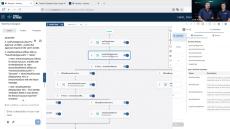
Episode 3 of Resolve Reels is live! Test faster. Build with confidence. In this episode, we show how to validate activities in isolation inside Resolve so you can catch issues early and move faster. What you’ll learn: Build. Test. Scale. Watch now!
  |  By Resolve
By initiating a digital transformation that reaches far beyond adopting new technology, an organization can undergo a profound metamorphosis that not only dramatically changes its form and appearance, but leaves it far better positioned to compete in the 21st century.
  |  By Resolve
Network operations have evolved radically in the wake of digital transformation - and the increasing infrastructure complexity that accompanied it. As NetOps teams roll out and support next-generation technologies, they face a myriad of challenges and changes in their daily operations. Every network team is under unprecedented pressure to safeguard business continuity, network security, and quality of service at all costs. Reliable and high-performing connectivity has truly never been more important, making the role of the NOC more critical than ever before.
  |  By Resolve
The role of IT teams continues to expand and evolve as digital transformation accelerates. Technologies such as cloud, virtualization, edge computing, microservices, and containers have now entered a phase of mass adoption and are being implemented at unprecedented rates while staffing has remained flat for most IT teams. Overburdened IT organizations are struggling to keep up with the scale of their infrastructure and the diversity of the technologies they support.
  |  By Resolve
The CMDB has been around for decades, creating heartache and misery for the IT people tasked with maintaining it. Originally implemented to help track and manage ever-changing IT assets, more often than not, the CMDB is outdated the moment the last keystrokes are made. This eBook explores the checkered past of the CMDB and how AIOps and IT automation tools are helping it overcome its bad reputation to usher in a new era where the CMDB can finally deliver on its long-awaited promise.
  |  By Resolve
2020 has presented many unexpected challenges. As we adjust to new ways of working and living, IT teams have felt the changes more acutely than most. Global organizations have seen their business processes turned upside down with tectonic shifts towards digital channels.
  |  By Resolve
IT Service Management (ITSM) platforms drive increasing value over time by identifying, tracking, and reporting IT incidents. However, incident resolution needs are not fully addressed by an ITSM. Optimizing incident management is an important step to explore as validating, diagnosing, and resolving incidents today are often manual, time consuming, and can have dire consequences.
  |  By Resolve
Artificial Intelligence for IT Operations, or AIOps, is very much in its infancy, and most IT Operations pros are still trying to figure out what it means. That's not to mention thinking about where to even start. Each chapter in this eBook provides a deeper understanding of AIOps with actionable steps to help you get started on the path to revolutionizing your IT Operations.
  |  By Resolve
60% of organizations say incidents and outages cause IT team disruption and distraction*. While ServiceNow helps IT organize and manage incidents, Resolve seamlessly integrates ticket data from ServiceNow and accelerates incident resolution with automation.
  |  By Resolve
Today's Security Operations Centers are inherently at risk. Plagued with skill shortages and increasing incident volume, CISOs need to counteract widespread threats-like phishing, exfiltration, ransomware and lost devices-fast. A unified Security Incident Response Platform helps expedite your response by optimizing processes and empowering your security team.
  |  By Resolve
We hear a variety of reasons why security agents don't believe automation technology will work for them. Maybe they heard something from a peer or another technology vendor. Simply put, some of what you have heard, is an Automation Myth.

Resolve helps IT teams achieve agile, autonomous operations with an industry-leading, enterprise automation and AIOps platform. By combining insights from artificial intelligence with powerful, cross-domain automation, Resolve handles a wide array of IT operations – from dependency mapping, event correlation, and predictive analytics to intelligently automating actions based on those findings. Resolve leverages machine learning to analyze large volumes of systems data, producing a comprehensive view of infrastructure health. The platform identifies existing or potential performance issues, spots anomalies, and pinpoints the root cause of problems. Leveraging AI-driven insights, Resolve even predicts future issues and automates proactive fixes before issues impact the business.

Resolve also provides robust automation capabilities, enabling customers to automate things they never thought possible — ranging from simple tasks to highly complex, multi-step processes that involve multiple tech stacks, environments, and integrated systems. With thousands of prebuilt automations for everyday tasks and processes, Resolve makes it easy for organizations to get started quickly and then scale automation seamlessly. A drag-and-drop designer also enables new automations to be built with little to no code.

Purpose-built to address challenges posed by increasing IT complexity, Resolve enables organizations to maximize operational efficiency, reduce costs, quickly troubleshoot and fix problems, and accelerate service delivery. See why the Fortune 1000, leading MSPs, and the largest telcos on the planet trust Resolve to power more than a million automations every day. Learn more at resolve.io or follow us on Twitter @ResolveSystems.