
7 Downdetector Alternatives
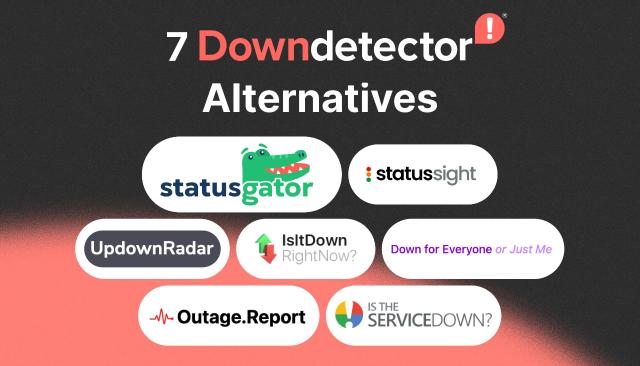
Downdetector is one of the best-known outage-tracking platforms, but its consumer-first approach has limitations for technical teams. Its reliance on user-submitted incident reports makes it prone to noise, false positives, and incomplete coverage of B2B and cloud-specific services. That’s why we’re exploring the best Downdetector alternatives available today, and highlighting which ones work best for businesses.
For IT teams, DevOps engineers, and SREs, cloud status monitoring demands accurate, verified, and actionable data, often sourced directly from providers’ own status pages or APIs, not just social sentiment spikes.
When a critical SaaS platform or cloud provider experiences downtime, minutes matter. The faster your team can confirm an outage, the sooner you can mitigate impact, communicate with stakeholders, and adjust workloads.
We will check out some of the strongest Downdetector alternatives, comparing how they source data, present it, and integrate it into your operational workflows.
1. StatusGator
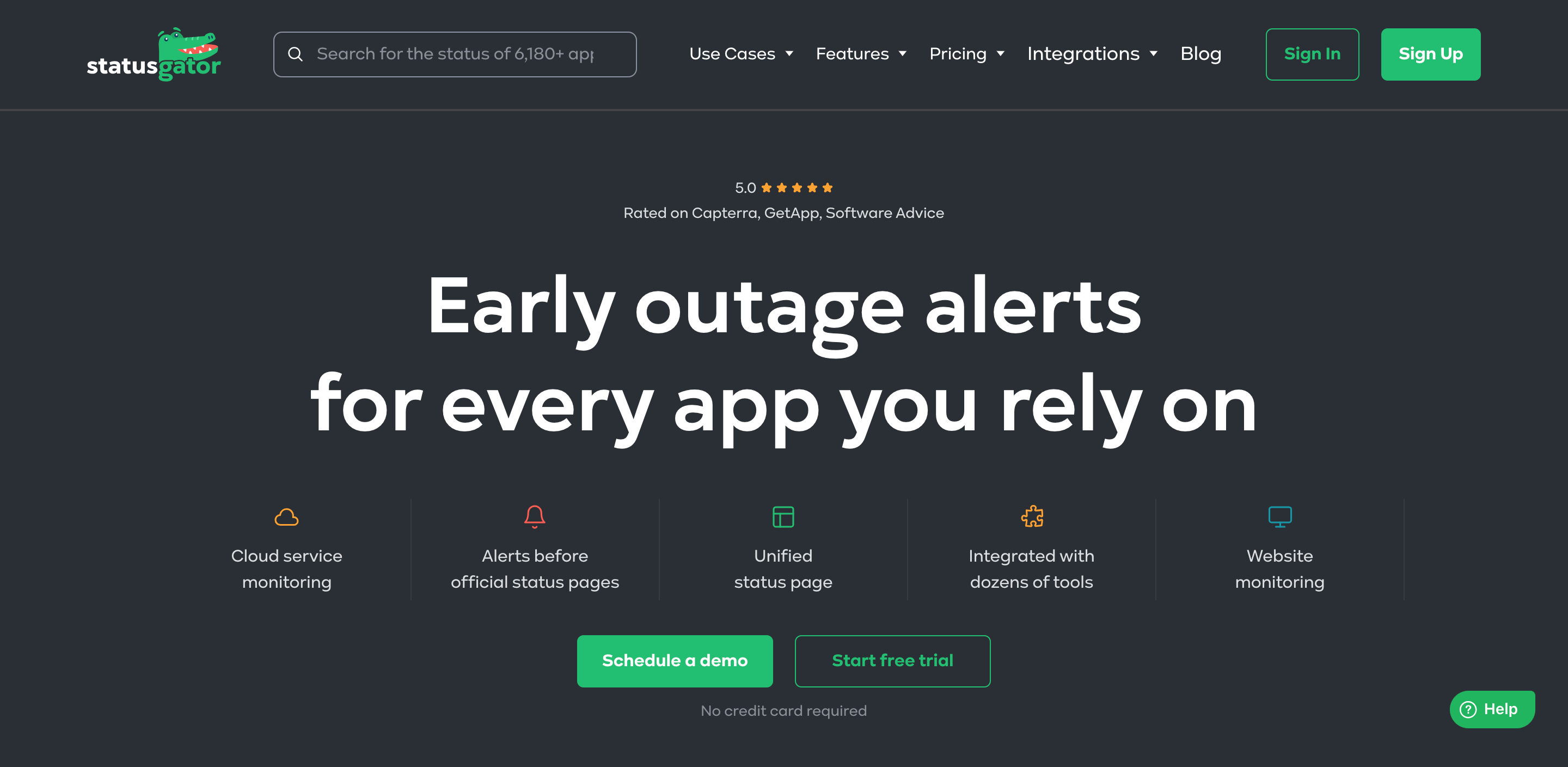
StatusGator collects and standardizes official status updates from over 6,000 cloud providers and SaaS platforms, including Azure, Zoom, and Atlassian. The platform supplements this verified data with the early warning signals from unofficial sources, making it a strong technical alternative to Downdetector.
Users receive real-time alerts for both potential and confirmed outages, with the ability to monitor only the specific components or regions they rely on. This reduces noise and ensures alerts stay relevant. This targeted approach makes StatusGator especially valuable for IT teams managing multi-service environments.
Key features:
- API-first design: pull real-time status into your status page, Slack, Teams, or custom monitoring tools.
- Normalized incident timelines and outage history for AWS, Cloudflare, OpenAI, and more.
- Multi-service dashboards with uptime history, current incidents, and scheduled maintenance windows.
- Configurable alerting via Slack, Teams, email, and webhooks.
- Enterprise-only Private Status Ingestion for secure internal or restricted services.
Best for: Teams who need reliable and readable outage data to feed into incident response and monitoring pipelines.
2. Down for Everyone or Just Me
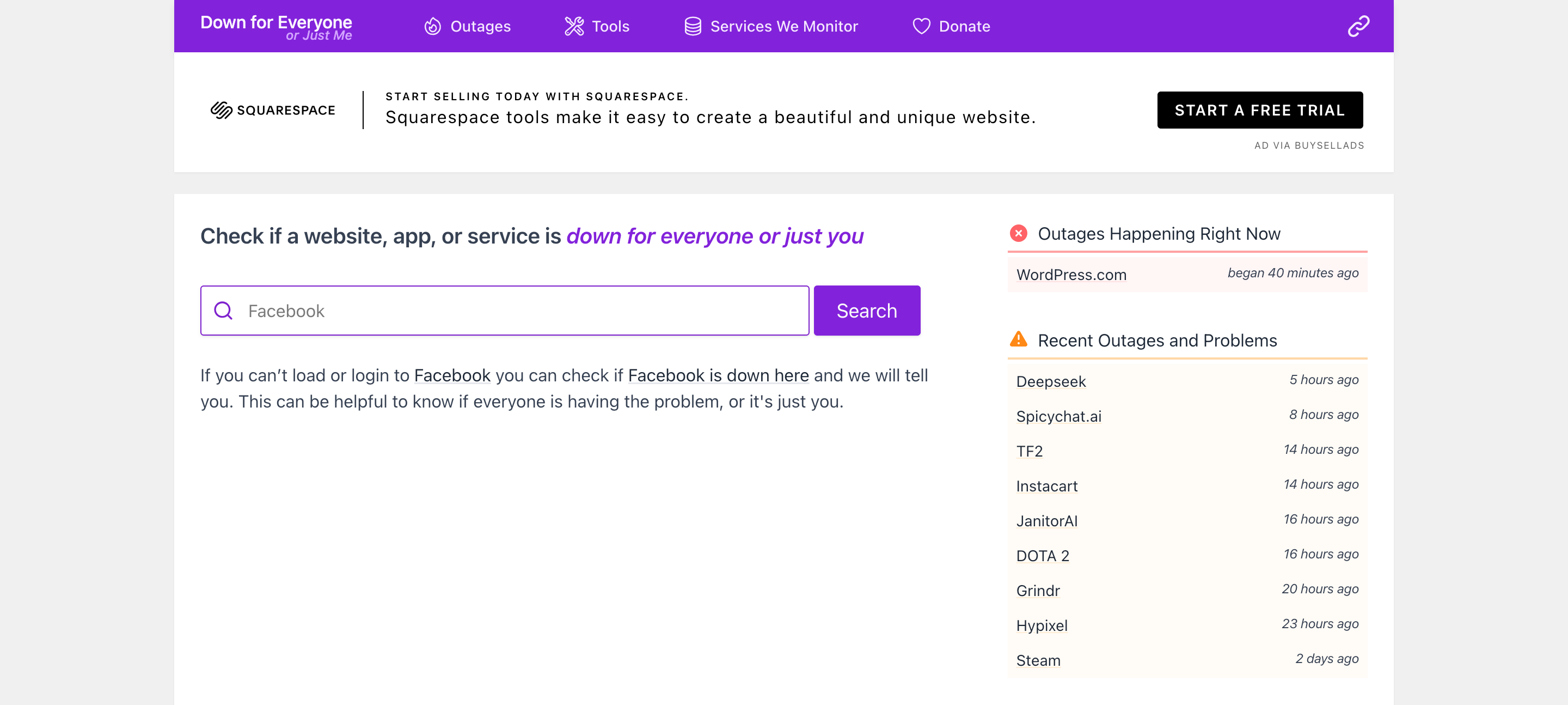
This website performs basic HTTP(S) requests to the target domain and reports whether it is reachable from the internet. All you have to do is enter a URL and get an immediate reachability check.
Key features:
- Simple endpoint availability check
- Confirms whether downtime is local to your connection or global.
- No historical outage tracking, API integration, or alerting capabilities.
- Cannot detect partial service degradation or backend/API failures.
Best for: Quick, ad-hoc validation during suspected outages; not suited for continuous monitoring or multi-service status aggregation.
3. Is It Down Right Now
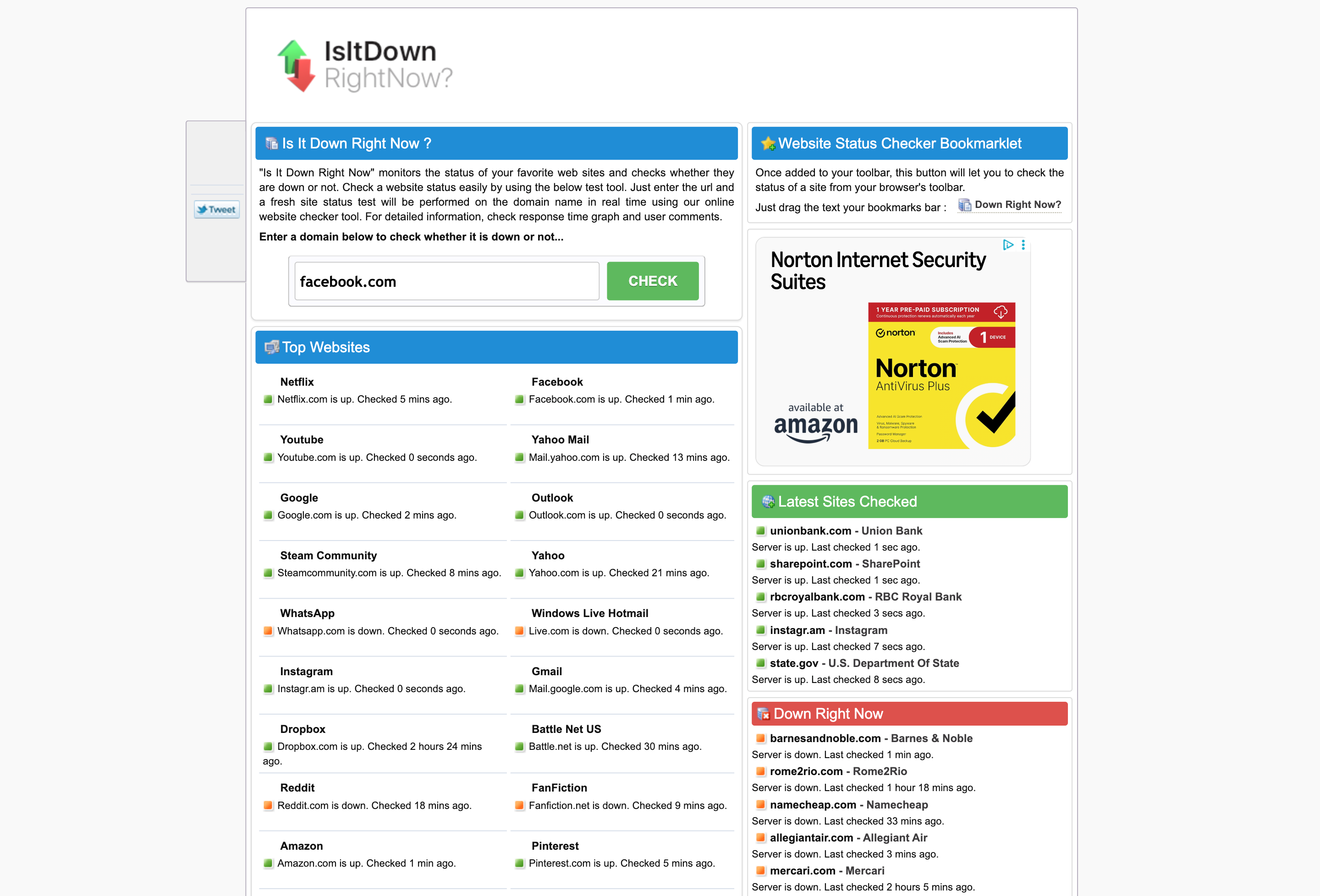
This platform uses direct HTTP(S) requests to the target domain from its own infrastructure and monitors the response time.
Key features:
- Displays server response time in milliseconds.
- Provides limited historical data for recent outages.
- Lists “most-checked sites” for quick navigation.
- No alerting API or automation-friendly integrations.
- Can detect full outages but not partial failures (e.g., degraded API endpoints).
Best for: Quick checks on popular consumer-facing websites; not built for enterprise service aggregation.
4. StatusSight
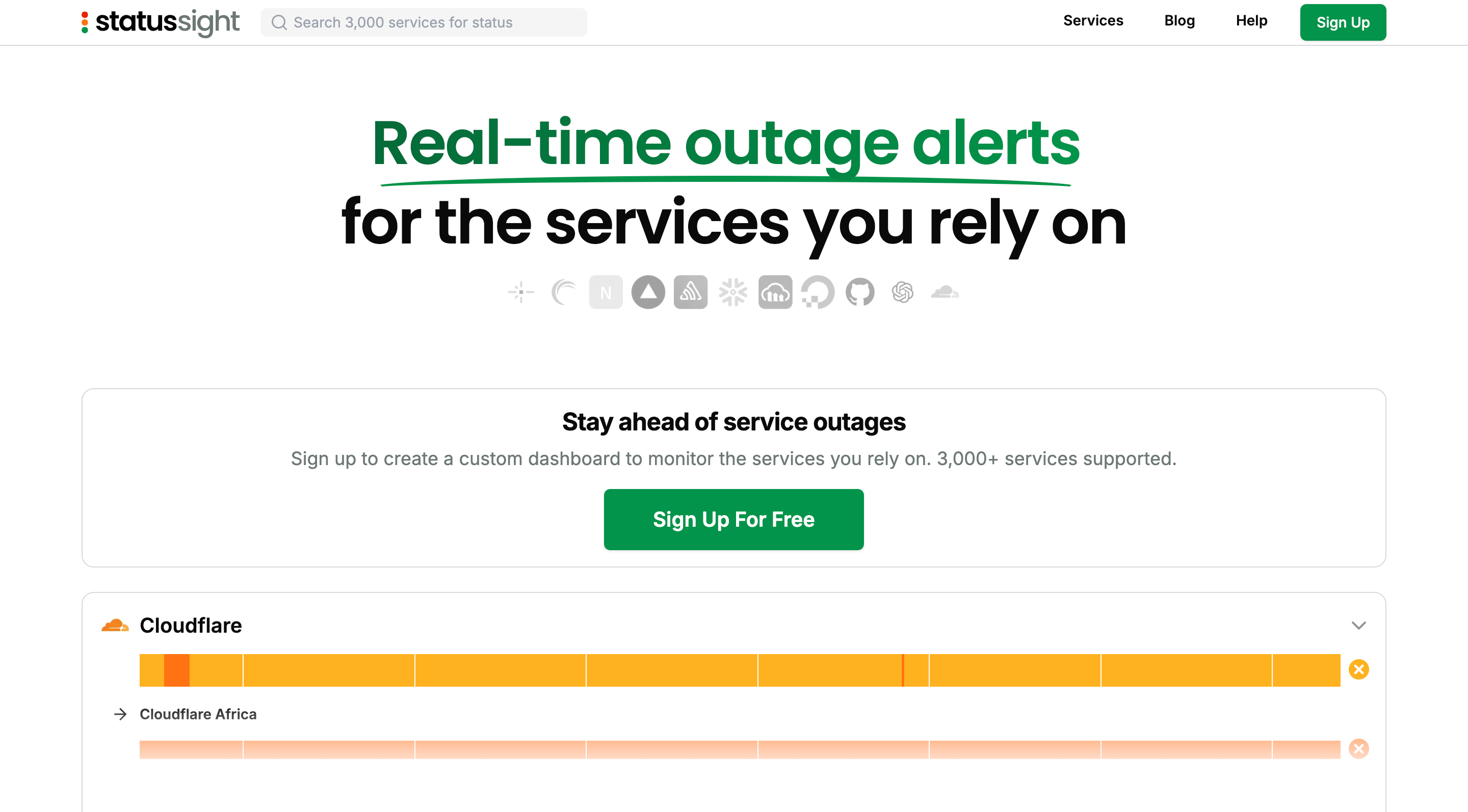
StatusSight pulls updates directly from official service status pages plus crowdsourced incident reports.
Key features:
- Aggregates incidents across SaaS, cloud, and infrastructure providers.
- Offers email and webhook alerts for new outages.
- Historical outage data for trend analysis.
- Stronger focus on business-relevant cloud services compared to consumer ISP/gaming monitoring.
- Limited public documentation on API endpoints; best suited for dashboard viewing and email/webhook delivery.
Best for: IT teams who need aggregated cloud provider status updates without maintaining custom polling scripts.
5. UpDownRadar
This website uses user-submitted outage reports and real-time HTTP status checks to display any disruptions. The limitation of the platform includes no API or automation hooks. The coverage for niche SaaS and cloud tools is very basic.
Key features:
- Instant URL testing with server response details.
- User comments for context during suspected outages.
- Outage history and response trend data.
Best for: Quick, manual spot-checks rather than ongoing enterprise monitoring.
6. Outage.Report
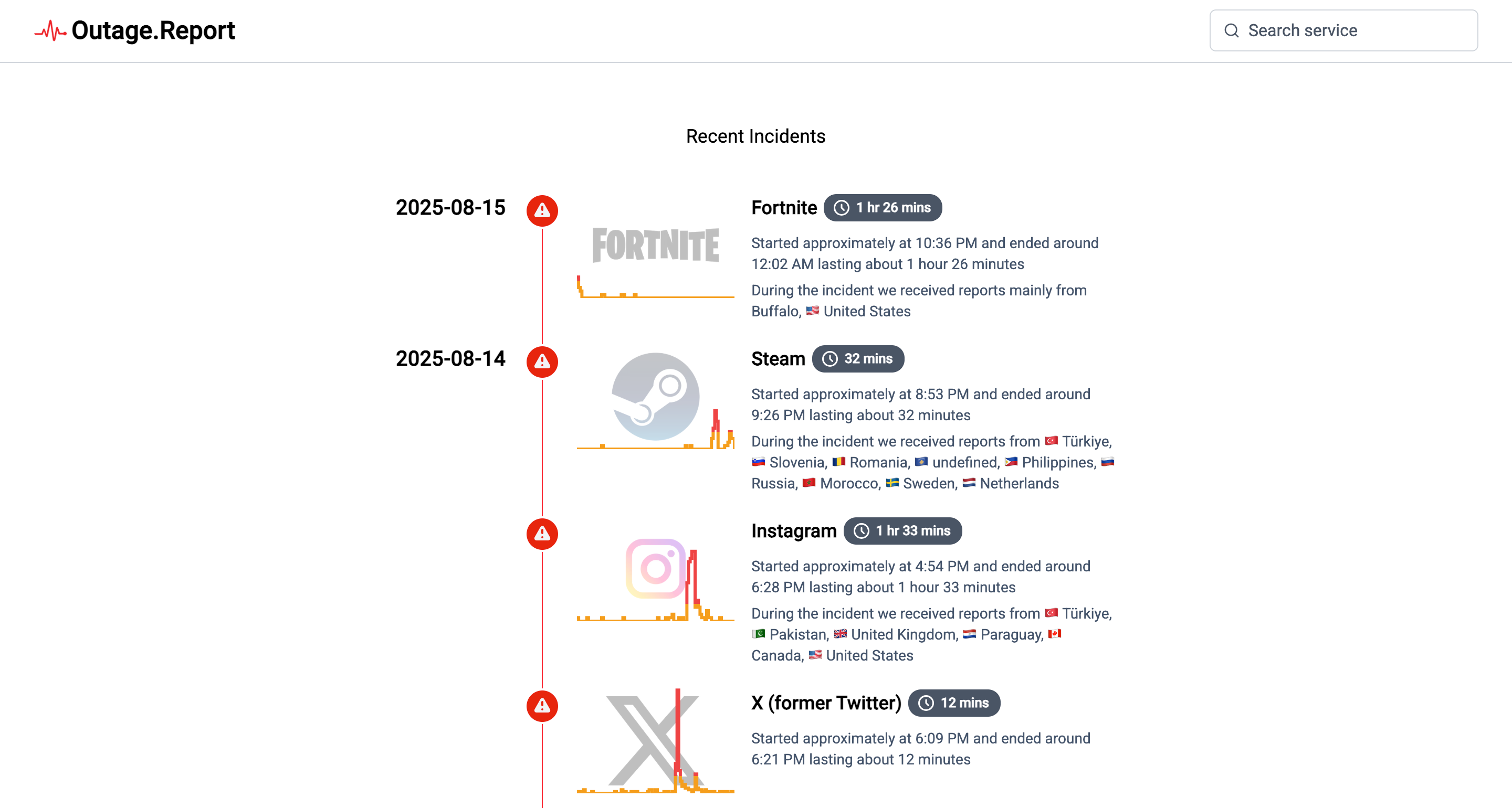
This platform also uses crowd-sourced incident submissions, organized by geography (9 supported countries) and service type.
Key features:
- Multi-month outage histories for trend analysis.
- Per-service outage maps and 24h report timelines.
- Limited enterprise cloud provider coverage; focus is on consumer ISPs, apps, and gaming platforms.
- No official provider integration, so data accuracy varies.
Best for: Supplemental intelligence alongside official monitoring sources; not a primary enterprise monitoring tool.
7. Is The Service Down?
This Downdetector alternative pulls reports from social media and applies sentiment analysis to detect anomalies. This alternative to Downdetector uses NLP and statistical baselines to detect spikes in negative service-related chatter.
Key features:
- Can identify issues earlier than official status pages in some cases.
- No direct API integrations or machine-readable output.
- Monitors ISPs, streaming services, gaming networks, and some cloud providers.
- Accuracy is limited by false positives and data noise.
Best for: Early detection if combined with authoritative status feeds.
Choosing the Right Downdetector Alternative
For professional incident response, the choice comes down to signal quality and integration capability:
- If you need verified, machine-readable data directly from cloud vendors, choose StatusGator.
- If you’re supplementing your toolkit with crowd sentiment for faster alerts, pair a social-based tool like Is The Service Down? with an official feed source.
In modern incident management, knowing if something is broken is not enough. You need to know exactly what, when, and how it impacts your systems. Downdetector may be fine for casual checks, but for operational resilience, the tools above give technical teams the clarity and automation they need.
FAQ
What is similar to Downdetector?
Several services provide outage monitoring and reporting similar to Downdetector. Popular alternatives include StatusGator, Outage.Report, IsTheServiceDown, UpDownRadar, DownForEveryoneOrJustMe, IsItDownRightNow, and StatusSight. These platforms track service availability, collect outage reports, and often provide historical uptime data.
What is the Downdetector app?
The Downdetector app is a mobile application that allows users to check the status of various online services in real time. It provides outage maps, historical data, and user-reported issues. The app is available for both iOS and Android, making it easy to monitor service interruptions on the go.
Is Downdetector free?
Yes. Downdetector offers free access to its core outage reporting and monitoring features through its website and mobile app. However, enterprise integrations and advanced analytics may require a commercial agreement with its parent company, Ookla.
How does Downdetector work?
Downdetector aggregates outage reports from multiple sources, including user submissions and social media. It uses algorithms to detect unusual spikes in problem reports compared to a normal baseline. When the spike exceeds a set threshold, Downdetector flags a potential outage and updates its platform with real-time status information, outage maps, and related user comments.