Operations | Monitoring | ITSM | DevOps | Cloud

The latest News and Information on Status Pages and related technologies.

Cloud Providers Health Report - August 2022

Check August 2022 health report on the top 10 most popular cloud providers. We analyze the health of the cloud providers based on the number of outages and problems during the month. Please analyze the information with a grain of salt as each provider has their own framework for reporting incidents, and in no way one provider having more outages, means that they are worse than other. Also we are comparing providers with very different sizes and market share.

Monitoring outages in your third-party services with LogSnag

LogSnag is the new kid on the block, but we bet that it will become relevant in this space soon. Today we will show you how to monitor outages and get alerts for your third-party services within LogSnag. What is LogSnag? Here's the intro, but you can learn more at LogSnag official website.

Using StatusPage at squadcast | SRE Best practices | Squadcast

Let your customers know how your Services are doing, without them having to ask you about it. One of the core principles of SRE is Transparency and Status Pages help you communicate the status of your Services to your customers at all times, as opposed to you getting to know the status of your Services through support tickets logged by your customers.

New Feature: StatusCast now integrates with Google Translate

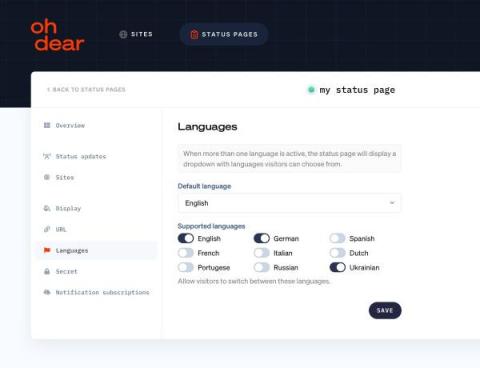
Here at StatusCast we understand the importance of a resourceful and communicative status page. A status page is the ambassador of your incident response management process, and like any good ambassador, it needs to speak the language. If your status page is now hosted by StatusCast, it is now fully integrated with Google Translate, a powerful tool that allows your subscribers and even viewers to translate your page into the language most comfortable to them.

Monitor 3rd-party outages in PagerDuty

We’ve integrated IsDown with PagerDuty so you can manage alerts in the same place you manage all your other alerts. The PagerDuty integration is part of our strategy to make it easy to monitor all the business dependencies that companies nowadays have. We live in a world where SaaS rules the world, and companies prefer to buy vs. build. But with that comes the problem of monitoring all these dependencies, which are critical to daily operations.

Protect your StatusGator Account with Two-Factor Auth

StatusGator now supports Two-Factor Authentication, often called 2FA, a more secure way of signing into your account. Using an authenticator app such Google Authenticator, Authy, or a password manager like 1Password, you can now protect your StatusGator account with a second authentication factor, a one-time password (OTP) that you enter after signing in.

StatusCast Top Picks: 10 More Awesome Customer IT Status Pages

IT services are a critical backbone to the operations and functioning of most every business and organization. As more and more IT departments have embraced the need for good governance, this has driven greater transparency. From the perspective of IT service management, this has manifested itself as much greater openness when communicating about IT service availability.

Status Pages: The Ultimate Guide

Status pages have become the end-users window into your team’s operations. Companies with status pages are doing the right thing for their users — building in some transparency while mitigating frustration and support contact. For the benefits of status pages to pay off, organizations need to treat them as something more than active wiki-pages run by support.

AWS outage? A better way to monitor outages in Amazon Web Services

Amazon Web Services (AWS) needs no introduction. It's one of the most popular services in the world. Or actually, the most popular cloud infrastructure provider (34%) according to this study. Like in any other service, there are outages. For people running their infrastructures, there's a good chance that outages have impacted your business in the past. And the reality for AWS (or any other service) is that there's a good chance it will happen again.