Operations | Monitoring | ITSM | DevOps | Cloud

Avoid dropped logs due to out-of-order timestamps with a new Loki feature

Dropped log lines due to out-of-order timestamps can be a thing of the past! Allowing out-of-order writes has been one of the most-requested features for Loki, and we’re happy to announce that in the upcoming v2.4 release, the requirement to have log lines arrive in order by timestamp will be lifted. Simple configuration will allow out-of-order writes for Loki v2.4.

Scale for fully automated Kubernetes monitoring in minutes

Monitoring your Kubernetes clusters within Splunk Infrastructure Monitoring has never been easier. Just click data setup and select Kubernetes to begin learning more about your Kubernetes environment and workloads. Test drive your free trial of Splunk Infrastructure Monitoring today to seamlessly get your data in to navigate effortlessly and pinpoint problems in real time.

Monitoring password protected sites using Oh Dear

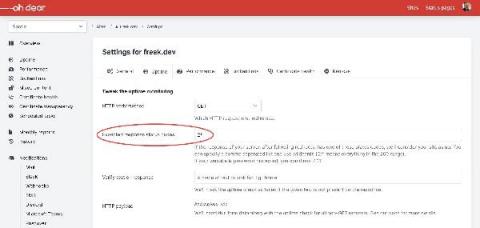
Keeping an eye on your site and sending you a notification when it goes down is one of the core features of Oh Dear. Under the hood, we'll send a request to your site and take a look if the response code is in the 200-299 range, which is the default response code range to indicate that everything is ok. Some of our users are monitoring password protected sites. In such cases, the web server might reply with status code 401 (unauthorised).

What Are JSON Web Tokens?

A JSON web token (JWT) is a URL-safe method of transferring claims between two parties. The JWT encodes the claims in JavaScript object notation and optionally provides space for a signature or full encryption. The JWT proposed standard has started to see wider adoption with frameworks like OAuth 2.0 and standards like OpenID connect leveraging JWTs.

Getting started with CPU attacks

The CPU attack is one of the most common attack types run by Gremlin users. CPU attacks let you consume CPU capacity on a host, container, Kubernetes resource, or service. This might sound like a trivial exercise, but consuming even small amounts of CPU can reveal unexpected behaviors on our systems. These behaviors can manifest as poor performance, unresponsiveness, or instability.