Operations | Monitoring | ITSM | DevOps | Cloud

Why Debugging JavaScript Sucks - And What You Can Do About It

What makes JavaScript great is also what makes it frustrating to debug. Its asynchronous nature makes it easy to manipulate the DOM in response to user events, but it also makes it difficult to locate problems. And JavaScript’s ubiquity has resulted in a variety of runtimes (e.g. Chromium’s V8, Safari’s JavaScriptCore, and Firefox’s SpiderMonkey) but having so many platforms can cause dizzying idiosyncracies — all of which need to be supported equally.

Debugging with Dashbird: Lambda Task Timed Out After X Seconds

When building serverless applications, Lambda functions often form the backbone of the system. They might provide just a few lines of code, but these lines are usually what hold the whole architecture composed of many managed services together. Event-driven architecture is what this style is called, and it’s most prevalent in serverless applications. API gateways collect requests from your users, convert them to events, and send these along the way.

Getting Started with Memfault for MCUs

Memfault recently launched a free self-service portal giving embedded developers instant access to Memfault across Android OS devices or ARM-based microcontroller devices running on bare metal or real-time operating systems (RTOS). In this recorded webinar, you'll learn what Memfault is and how you can use it for device observability at scale.

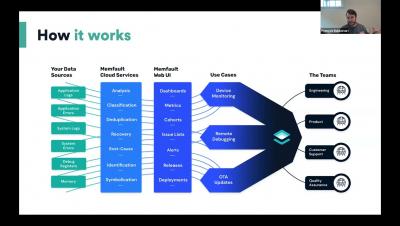
How to Debug HardFaults on ARM Cortex-M MCUs

No matter your use case or how sophisticated your hardware is, faults happen on embedded devices all the time for a variety of reasons. Maybe it’s something easy like a reproducible NULL pointer dereference you hit during development or maybe it’s something more subtle like memory corruption or divide by zero faults that only exhibits themselves in zero-g, high temperature, weak magnetic field, or noisy RF environments!

How to Debug Race Conditions Between Threads in Java

How many days off have been marred by debugging race conditions and deadlocks in complex multithreaded, Java code? You’ve probably vowed, Never again and embarked on a quest to always catch race condition errors early by writing tests and debugging. Multithreaded applications are a great way to improve performance, but they also make routine tasks like debugging a little more complicated.

Using LogDNA to Debug in Development

Developing scalable and reliable applications is a serious business. It requires precision, accuracy, effective teamwork, and convenient tooling. During the software construction phase, developers employ numerous techniques to debug and resolve issues within their programs. One of these techniques is to leverage monitoring and logging libraries to discover how the application behaves in edge cases or under load.