
Operations | Monitoring | ITSM | DevOps | Cloud

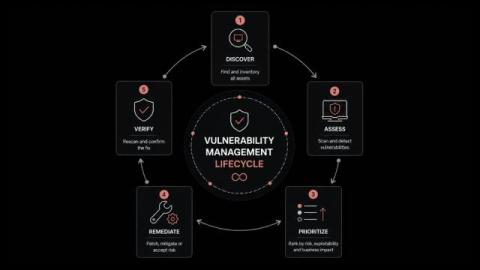
How the Vulnerability Management Lifecycle Runs from Discovery to Verified Fix

Who in your organization can say, without opening three separate systems, whether last month's critical findings are actually closed? A deployment record answers half of that. The other half needs a rescan, and the rescan often never happens. The vulnerability management lifecycle is that question written down as a repeatable process. It runs from knowing what you own through to proving a fix landed, and it restarts the moment it closes.
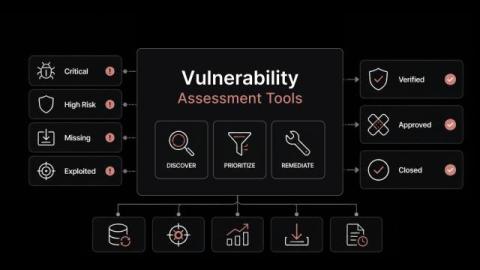
What are the Key Features and Evaluation Criteria for Vulnerability Assessment Tools?

How many findings from your last vulnerability scan have been verified as fixed? For most IT functions, the scan report is easy to produce, and the proof of closure takes far longer to assemble. That difference tends to surface at the worst possible moment, usually an audit or a post-incident review. Vulnerability assessment tools are meant to end that uncertainty. They inspect systems, match what they find against public vulnerability databases, and rank each weakness by how dangerous it is.

Vulnerability Assessment and Penetration Testing: Differences, Cadence, and Cost

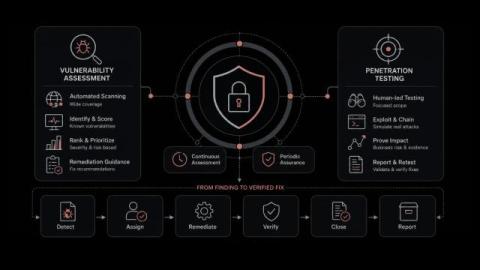
What do you say when an auditor asks for evidence that your security controls hold, and all you can produce is a scan report from last month? A scan lists weaknesses. It says nothing about whether an attacker could chain three of them together and reach the customer database. Vulnerability assessment and penetration testing answer two different questions about the same environment. The first asks what is exposed right now. The second asks what someone with intent and skill could do with that exposure.

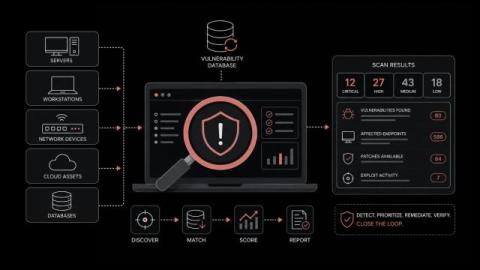
What Is a Vulnerability Scan? How It Works and What the Results Mean

How many machines in your environment are running software with a publicly documented security flaw right now? That figure comes from an asset inventory, and asset records age quickly once they are written. The gap is rarely about tooling budgets. Software inventory across a few hundred endpoints shifts every week, while the published catalogue of flaws in that software grows every single day. Manual inspection loses that race inside the first month.

How Claude Mythos Changes the Future of Vulnerability Management: Fixing, Not Finding

Anthropic’s Claude Mythos shows how AI is making vulnerability discovery nearly infinite. Endpoint remediation is where IT teams win or lose. In April 2026, Anthropic introduced Claude Mythos Preview, an AI model that autonomously discovered thousands of previously unknown vulnerabilities across every major operating system and web browser. By late May, the running total had passed 23,000 potential findings, and the vast majority were still unpatched.

Why Static Reachability Isn't Enough for CVE Remediation

Most CVE remediation tools can tell you that a vulnerability could be exploited. Few can confirm whether it actually is. A scanner flags the same CVE in two services and marks both as vulnerable. Only one of them ever runs the flawed code in production. That gap, reachable in theory versus reachable in fact, is the real problem, and static analysis alone cannot close it.

Active Directory Disaster Recovery: A Fault-Tolerant Approach to the Worst-Case Scenario

Active Directory (AD) serves as the central nervous system for the vast majority of enterprise IT environments. It manages identities, secures access to resources, and acts as the gatekeeper for authentication across thousands of endpoints. Because of its foundational role, the failure of AD, whether due to ransomware, logical corruption, or accidental deletion, often results in a total organizational standstill. When the directory goes dark, file shares, email systems, and cloud-integrated applications all become inaccessible.

5 Zero Day Attack Myths That Could Leave You Exposed

Zero day vulnerabilities remain one of the most misunderstood threats in cybersecurity. The term gets thrown around in headlines, vendor reports, and boardroom conversations, often accompanied by more confusion than clarity. Security researchers at firms including Mimecast have repeatedly noted that misconceptions about zero day attacks can be just as dangerous as the exploits themselves, because they lead organizations to underinvest in the right defenses while overspending on the wrong ones.

Vulnerability scanners find problems. A firewall prevents them.

A vulnerability scanner tells you what's wrong with dependencies you've already pulled. A dependency firewall decides what enters your environment in the first place. Instead of pulling blindly from public registries, every request is proxied through the firewall – where policy controls what's permitted, threat intelligence flags malicious packages that scanners never see, and enforcement happens at the earliest possible point. Scanning what's already inside is too late.

AI Found 18 OpenSSL Vulnerabilities. Now Your Team Has to Patch Them.

On June 9, 2026, the OpenSSL project released patches covering 18 vulnerabilities across its supported releases. The headline flaw, CVE-2026-45447, is rated high severity and has the potential for remote code execution. Not too long ago, a security advisory with 18 vulnerabilities would have been routine. Microsoft’s Patch Tuesday provided a predictable cycle, and organizations operated with the expectation of a meaningful remediation window. That model is under pressure.