Flood Control - xMatters Support
Alert flood control reduces the number of alerts that are generated in xMatters when you experience a flood or alert storm from one or more of your systems.


It was Einstein who once said “the secret to creativity is knowing how to hide your sources.” The world of IT isn’t exactly known for being a creator’s paradise but navigating obstacles within problem management or incident management may take creative solutions. Regardless, it helps to borrow ideas, or in this case systems. One such popular system in IT service management is ITIL.
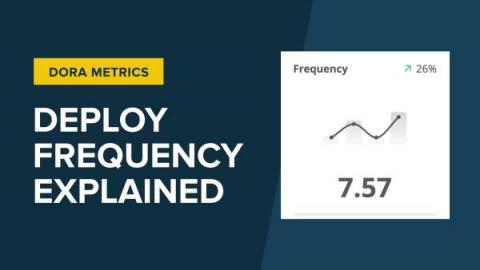
While metrics have always been fundamental to improvement in the business world, the growing prominence of DevOps in recent years has elevated their importance in the context of software development. To build a continuous improvement culture, you need a set of metrics that allows you to establish a baseline and inform where the improvement opportunities lie. Arguably the most popular of them is DORA metrics. In this post, we will focus on Deployment Frequency, one of four DORA metrics.
Every IT Ops team uses key performance indicators (KPIs) to track metrics that keep them accountable, improving, and contributing to long-term success. But it’s easy for teams to lose sight of what KPIs to use, how many they should use, and how to derive meaning from them. To shed light on what constitutes a meaningful KPI, Sterling Nostedt, BigPanda’s Value and Adoption advisor, hosted a community conversation which spanned across multiple industries.
Whiskey and Wisdom is a monthly executive-only forum where ITOps leaders can network independently and discuss high-level AIOps and ITOps strategies with their industry peers. In our most recent session, the discussion was geared specifically towards AIOps—its hype and its reality. Here are some quick value takeaways from the conversation.
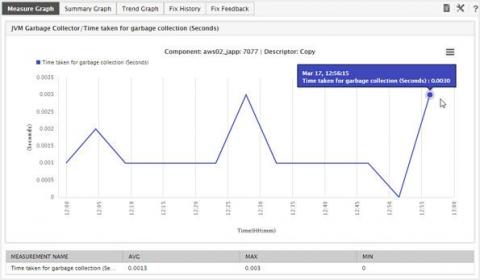
For many, the world of Java is shrouded in mystery and endeavor. One such endeavor is garbage collection. There is many a viewpoint on garbage collection – whether it is good or bad, when is it needed, how often should it run, how to tune garbage collection operation, how to know when it is not operating as expected, and so on. In this educational post, we will try to clear the air on Java garbage collection and make it easy for developers and administrators to deal with it.
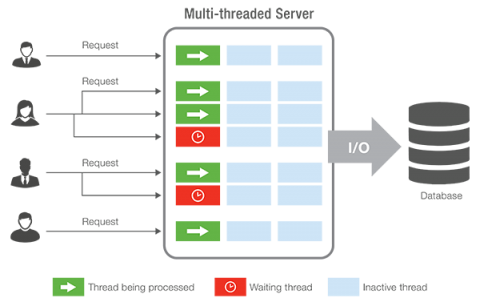
A thread, in the context of Java, is the path followed when executing a program. All Java programs have at least one thread, known as the main thread, which is created by the Java Virtual Machine (JVM) at the program’s start, when the main() method is invoked with the main thread. In Java, creating a thread is accomplished by implementing an interface and extending a class. Every Java thread is created and controlled by the java.lang.Thread class.