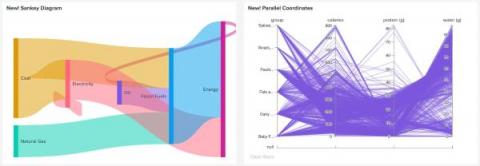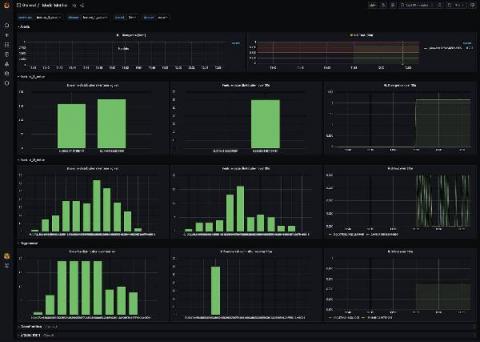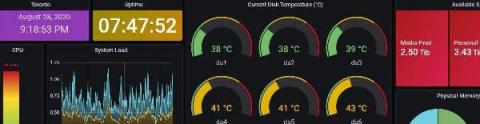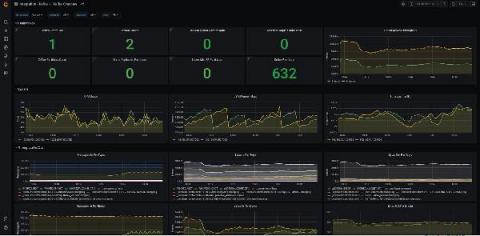
In April, we brought you the ability to dashboard any data with the new SquaredUp Dashboard Server product – for free. Then at SquaredUp Live, we announced the launch of Dashboard Server Enterprise for enterprise organizations who have got to grips with their dashboarding and now want to scale up. You can purchase unlimited named users and get endless data connections plus new, enterprise integrations that let you dashboard just about anything.
We have been collecting Logplex data for our Heroku customers for a while now. With that data we create Magic Dashboards for Postgres and Redis integrations, and track Heroku Host Metrics. Starting today, we also extract error incidents from Heroku Logplex data and provide you with a magic dashboard for Heroku status codes.
One of the greatest challenges you may face when creating Kubernetes dashboards is getting the full picture of your cluster. Kubernetes is the de-facto standard for container orchestration, but it also has a very steep learning curve. We, at Sysdig, use Kubernetes ourselves, and also help hundreds of customers dealing with their clusters every day. We are happy to share all that expertise with you in the Kubernetes Dashboards.
Whether it’s during an incident to find the root cause of the problem or during development to troubleshoot what your code is doing, at some point you’ll have an issue that requires you to search for the proverbial needle in your haystack of logs. Loki’s main use case is to search logs within your system. The best way to do this is to use LogQL’s line filters. However, most operators are case sensitive.
In this blogpost I will introduce, how to create a business process from monitored hosts and services and how to add them to dashboards. Business Process module is an interesting module in Icinga Web 2. It allows you to visualise and monitor hierarchical business processes based on any or all objects monitored by Icinga. We can create custom business process and trigger notifications at process or sub-process level.
Daniel is a Site Reliability Engineer at k6.io. He’s especially interested in observability, distributed systems, and open source. During his free time, he helps maintain Grafana Tempo, an easy-to-use, high-scale distributed tracing backend. Distributed tracing is a way to track the path of requests through the application. It’s especially useful when you’re working on a microservice architecture.