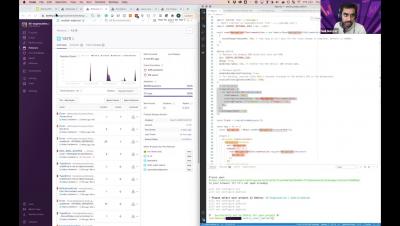
A memory leak in an application deployed on the cloud can affect the availability and reliability of the application. Therefore, it is highly important to identify and ultimately resolve it quickly. However, in the production environment running on the cloud, memory leak detection is a challenge without the knowledge of the application or its internal object allocation details.
Languages are complicated, and every language is complicated in different ways that can be hard to understand without learning every single one of them. Some languages form words from multiple characters while others have symbols that represent entire concepts. Some feature words without pluralization or gender and rely on context for that while others have two or even more genders for words. Some are very phonetic while others pronounce words seemingly at random (cough English, though cough).
We’re here at last: the final days of 2020. Let’s take a look back at this year’s most popular Honeycomb blog posts.
Avon and Family Tree aren’t companies you would normally associate with cybersecurity, but this year, all three were on the wrong side of it when they suffered massive data breaches. At Avon 19 million records were leaked, and Family Tree had 25GB of data compromised. What do they have in common? All of them were using Elasticsearch databases. These are just the latest in a string of high profile breaches that have made Elasticsearch notorious in cybersecurity.
This is last installment of our 3-part series on running ELK on Kubernetes with ECK. If you’re just getting started, make sure to check out Part 1 and Part 2. With that, let’s jump right in.
This is everything you need to know about FlashDrive, and how it can help you reduce your infrastructure costs while improving your applications' responsiveness and overall quality. FlashDrive is a Docker cloud hosting service constituted in a network of high availability clusters located in North America and Europe. To completely understand what FlashDrive is and how it can help you, let's first talk about the Docker cloud, containers, and the purpose of containerization.
In 2020 we slowly, but surely, improved our service. The UI has vastly improved and we added two major new features. Time for a recap!
Cloud computing sometimes spoils one with choices. Let's just take a look at a couple of common cloud services. You can use cloud services to deploy and scale web and mobile apps besides monitoring them. AWS and Heroku provide cloud computing resources. AWS is from Amazon, while Heroku is from Salesforce. In this article, let us see which one is better to use from the start-up perspective.