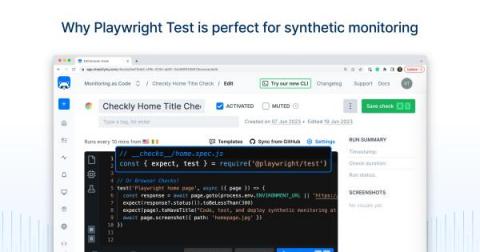
One of the most effective ways to monitor a critical user flow on a website—or monitor the operation of a critical API that other applications depended on—is to adopt synthetic monitoring. Synthetic monitoring is an approach to monitoring websites and applications that simulates the actions of real users via browser automation. It mirrors the actions that a visitor may take on your website, say browsing an online shop, adding items to a shopping cart, and then checking out.
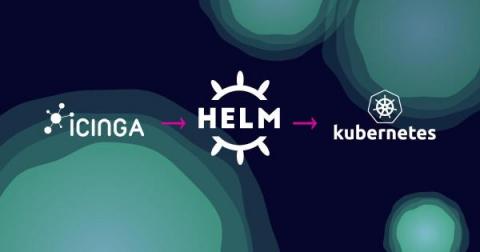
Before attending Icinga Berlin in May this year, Daniel Bodky and Markus Opolka from our partner NETWAYS developed the very first Icinga Kubernetes Helm Charts and released it in an alpha version. If you have ever wanted to deploy an entire Icinga stack in your Kubernetes cluster, now is your chance. I also want to highlight Daniel’s talk again on how Icinga can run on Kubernetes and the challenges involved.
The Raspberry Pi, a compact single-board computer, is widely used for DIY projects to industrial applications. These devices ship with a customized Linux distribution that differs from standard Linux, adding a layer of complexity for developers trying to troubleshoot application problems and dependencies.
In the ever-evolving stock market landscape, immediate access to accurate information is crucial for investors and financial experts alike. In this piece, titled "Monitoring Real-Time Stock Quotes with MetricFire," we dive deep into the realm of advanced technology, focusing on its potential to transform stock market tracking and decision-making procedures.
Fleet, also known as “Continuous Delivery” in Rancher, deploys application workloads across multiple clusters. However, most applications need configuration and credentials. In Kubernetes, we store confidential information in secrets. For Fleet’s deployments to work on downstream clusters, we need to create these secrets on the downstream clusters themselves.