Operations | Monitoring | ITSM | DevOps | Cloud

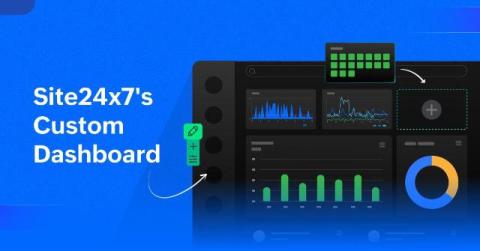
How we use Grafana Alloy clustering to scrape nearly 20M Prometheus metrics

If you are interested in running your own Grafana Alloy cluster for high availability or horizontal scalability, then you’re in the right place. That’s because we’ve already done it with our own agentless exporters system, which allows you to scrape data from providers such as Amazon CloudWatch, without running any applications on your own infrastructure.

10 Budget-Friendly Ways for MSPs to Show Customer Appreciation

Maintaining strong relationships with your customers is essential. As an MSP, your customers rely on you for their IT solutions, cybersecurity, and overall technological support. But beyond providing these services, creating a sense of appreciation and gratitude can enhance customer satisfaction, add value to the relationship, and boost loyalty. While grand gestures may seem appealing, sometimes it’s the small, thoughtful actions that can make the biggest impact.

Deadman Alerts with Grafana and InfluxDB Cloud 3.0

Flagging failures or inactivity in your monitoring system are crucial for maintaining operational reliability. This blog will guide you through setting up deadman alerts using Grafana and InfluxDB Cloud, tools that help you detect issues before they become critical. We’llintegrating Grafana’s visualization capabilities with InfluxDB Cloud’s data management features to create a robust monitoring system.

Classful and Classless Addressing Explained

If you’ve ever been in charge of IP address assignment, you’ve come across the terms classful and classless addressing. If you haven’t, the main difference between classful and classless addressing is in the subnet length: classful addressing uses fixed-length subnet masks, but classless uses variable length subnet masks (VLSM).

Network Basics: What Is Link Aggregation & How Does It Work?

Link aggregation is a way of bundling a bunch of individual (Ethernet) links together so they act as a single logical link. A fundamental for effective switch management, if you have a switch with a whole lot of Gigabit Ethernet ports, you can connect all of them to another device that also has a bunch of ports and balance the traffic among these links to improve performance.

Anodot vs. Yotascale: Which FinOps Provider Should MSPs Trust?

MSPs can’t afford to use a Cloud Management Solution (CMS) that doesn’t follow their FinOps standards. Even with useful features, if a CMS hasn’t seen significant upgrades since its launch, it’s likely outdated and not meeting industry standards. If you can’t count on a CSM for the best FinOps recommendations, can you call them reliable partners? That’s just one of the major differentiators between us (Anodot) and Yotascale.

Boost Data Center Efficiency: DCIM Meets ASHRAE Standards

ASHRAE provides detailed recommendations for data center environmental conditions through its Thermal Guidelines for Data Processing Environments. These guidelines specify temperature and humidity ranges that ensure the optimal performance and longevity of IT equipment. The latest guidelines define four classes (A1 to A4) for allowable and recommended temperature ranges, with the recommended range for Class A1 being 18°C to 27°C (64.4°F to 80.6°F).

Journeying to Autonomic IT in the Face of IT Complexity: Challenges and Solutions for IT Leaders

Modern IT infrastructures are more than just a support system; they are the beating heart of business innovation and success. However, these environments are incredibly complex, which comes with information silos and a lack of visibility, posing a significant barrier to Autonomic IT. One of the main factors contributing to IT operations’ reaching this point of complexity is the growing use of cloud services.

The CTO Pocket Guide to Internal Developer Portals

The engineering macro-climate is in crisis. Market dynamics have put increased pressure on teams to ship faster in order to stay competitive, while budgets are under significant scrutiny. At the same time, the advent of new tools and architectures promising high-velocity, collaborative development increasingly lack the implementation structure needed to preserve their benefits. As a result, onboarding is stalling out, incidents are up, and deployments are down.