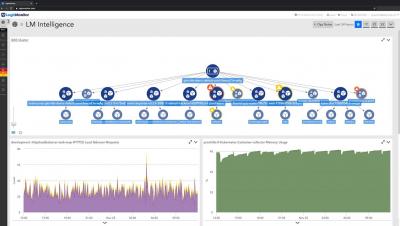
Amazon Web Services (AWS) provides tools that help with application management, machine learning, end-user computing, and much more. Users that utilize AWS, more than likely, have a combination of the many services AWS offers. LogicMonitor consolidates data from these services and empowers users to monitor them side by side with the rest of their infrastructure, whether it’s in the Cloud or on-premises. Keep reading for tips on monitoring some of these services to ensure business continuity.
Have you ever lost power to a server? Did it ever reboot on its own? Wouldn’t it be nice to prevent power outage to IT devices? If this is something you’ve experienced in the past, there are ways to simplify power monitoring and avoid some of the outages that can be caused by power issues. This article will focus on using power consumption data from a rack power distribution unit (rPDU) and how to simplify the process.
Amazon Web Services Elastic Load Balancer (AWS ELB) enables websites and web services to serve more requests from users by adding more servers based on need. Unhealthy ELB can cause your website to go offline or slow down dramatically. Elastic Load Balancing automatically distributes incoming application traffic across multiple Amazon EC2 instances.
LogicMonitor is the leading provider of infrastructure performance monitoring, offering granular insight and data collection across your entire IT stack. This includes on-premises hardware, microservices, and the Cloud. However, in a constantly evolving industry with increasing demands, your monitoring tool needs to be able to cover a broad array of technologies and integrations. LogicMonitor solves this with the LM Exchange.
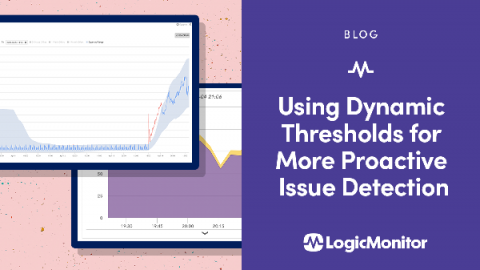
At LogicMonitor, we deal primarily with large quantities of time series data. Customer devices are monitored at regular intervals and data points are provided to our agentless application to be processed and interpreted. Recently, we’ve endeavored to expand the presence of machine learning in our application to enhance anomaly detection.
The shift to cloud infrastructure does not remove the need for infrastructure management and administrators but rather necessitates a shift in their responsibilities. Cloud infrastructure has grown to be a ubiquitous part of the modern software industry. This is an amazing growth when you realize that Amazon did not announce Amazon Web Services, starting with Elastic Cloud Computing (EC2), until 2006.