Operations | Monitoring | ITSM | DevOps | Cloud

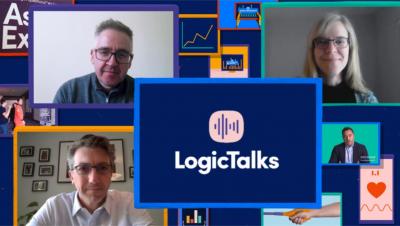
LogicTalks - How Logicalis Intelligently Monitors and Services it's Global Customer Base

In this episode of LogicTalks, Mark Banfield, Chief Revenue Officer at LogicMonitor, sits down with Justin Cawood, Director of International Managed Services Operations at Logicalis Group, to discuss how Logicalis, a managed services provider, has evolved the way they monitor their customer's infrastructures around the globe with LogicMonitor. Justin explains how LogicMonitor has allowed them to quickly discover and onboard new clients and infrastructures, consolidate tools and learnings across the global organization, and help Logicalis' customers to transition to cloud and hybrid environments and excel while working from home.

Why Is Designing an Effective Application Logging Strategy Important?

Observability is made up of metrics, logs, and traces. These pillars help us understand the behavior of applications under normal execution, which further accelerates identifying anomalies in case of application failure or deviation from normal execution. Logging is not about tracing each and every operation, it is about sensible, consistent, and machine-readable log messages that expose the application behavior.

How Is AI Transforming Cloud Management?

In 1927, the world was introduced to the origins of Artificial Intelligence (AI) in the form of a robot in the movie Metropolis. Throughout nearly a century since then, movies have continued to iterate on the complexities of AI, as both a fun take on it and serious commentary on the potential concerns and consequences. This is all well and good, but as AI has continued to evolve, we find ourselves asking, “how can we actually use this to make our lives easier?”

The Future of AIOps: 2021 Trends and How to Get Started

Technology trends transform human behavior permanently. In the past decade, we have improved as a society by embracing digital lives that drive faster collaboration and automation and save us a significant amount of time. The IT Operations landscape is not any different, and artificial intelligence (AI) is at the forefront of that.

Understanding the Layers of Log Infrastructure

If you’re reading this article, you’re most likely looking for a simple one-stop-shop way to understand logs. I’m sorry to be the one to tell you this, but logs are not simple enough to deal with easily. In fact, as you start approaching this topic on a practical level you’ll quickly realize how complex and annoying it truly is.

The Best Collaboration Tools for IT: MS Teams vs. Zoom vs. Slack

A key topic of conversation that comes up again and again with our customers is the challenge of collaboration in a remote work environment. Too many channels of communication or documentation are ineffective, and IT professionals are starting to feel fatigued by never feeling quite “in the know” with business decisions that are happening in real-time. When separated from colleagues, teams can feel distant and unmotivated or find it hard to stay focused.

Top 3 Things to Consider When Selecting a Log Analysis Platform

Effective log analysis can help you significantly reduce the time spent investigating and troubleshooting incidents. With the many different log analysis platforms available, it can be overwhelming to choose and difficult to know what to look for. In this short guide, we’ll share the top three things you should consider when selecting a log analysis platform for your business.

Respond to Alerts Faster With the Bidirectional Slack Integration for LogicMonitor

LogicMonitor is pleased to announce enhancements to our Slack integration. The new integration is now bidirectional, allowing users to acknowledge and SDT alerts from their Slack workspace. LogicMonitor accounts come pre-configured to integrate with Slack. The integration enables LogicMonitor to create Slack Channel Notifications based on LogicMonitor alerts.

Monitoring vs Observability: What's the Difference?

Monitoring has never been simple, but there was a time when it was simpler. You had a device you could collect data from; you knew the metrics you needed to monitor, and if something went wrong, you could find the root cause. But as IT becomes increasingly and exponentially more complex, more devices, more environments, more things to monitor, more updates, more data, more everything; monitoring in general needs to grow with it.