Launch Notes: Announcing Node.js for APM, all-new Customers, provider updates, and more
Raygun’s Launch Notes are your regular round-up of all the improvements we made to Raygun last month — from significant features to performance updates.


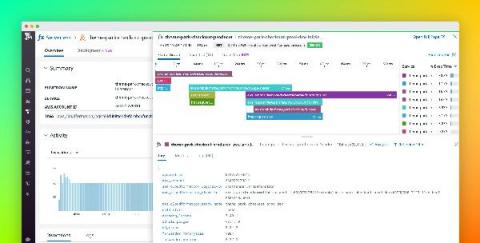
Last year, we released native tracing for AWS Lambda through Datadog APM to provide deep visibility into serverless functions and surface performance issues such as cold starts and errors, without any added latency. But Lambda functions are only one piece of the puzzle in a rapidly growing serverless ecosystem, which includes message queues, data streams, notification services, and more.
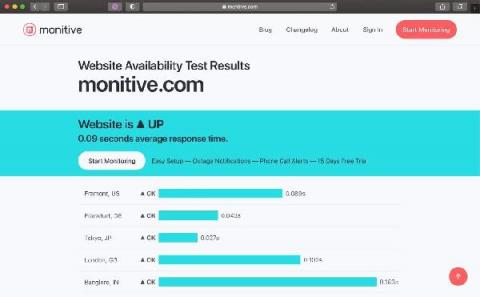
A feature that’s not available in the Monitive service, but has proven to be a useful helper is the ability to quickly check a website from several locations around the world. Just head out to the homepage and type in a website, with or without https://. Press Test Availability and you instantly get an overview of how your website is performing from several locations around the world.
The widespread adoption of Agile methodologies in recent years has allowed organizations to significantly increase their ability to push out more high quality software. Previous development practices revolved heavily around centralized applications and infrequent updates that were shipped maybe once a quarter or even once a year.
Mean time to repair (MTTR) is an essential metric that represents the average time it takes to repair and restore a component or system to functionality. It is a primary measurement of the maintainability of an organization’s systems, equipment, applications and infrastructure, as well as its efficiency in fixing that equipment when an IT incident occurs. Key challenges with MTTR arise from just trying to figure out that there is actually a problem.
When you are running cloud-based services as part of your overall business operations, it becomes necessary to monitor your cloud operations for evaluating the usage and efficiency of the cloud services, applications, and infrastructure. Cloud monitoring also lets you watch for threats and be mindful of cyber-attacks. Here is a brief rundown on how best to monitor cloud services and some tips to make it more efficient and useful.
Today, almost every application stack would usually consist of a number of different applications, each performing a specific role and working together towards a common goal. This is the case whether it be that of a fortune 500 company or a computer science student trying to complete a tech project. As such, the stability and reliability of your infrastructure would greatly depend on the performance of each application within that infrastructure.
Dive into the article to learn how to monitor cloud server performance with Graphite and get started on your monitoring needs! Application Performance Monitoring (APM) is a crucial part of the technological era. It refers to a methodological approach towards maintaining and sustaining a system’s health. It is extremely important to monitor an application’s health and performance upon launch, and then regularly afterwards.