Operations | Monitoring | ITSM | DevOps | Cloud

Adding preventive revocation alerts to our certificate monitoring

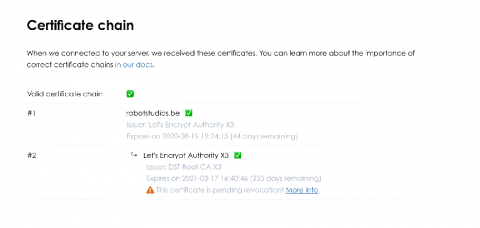
As part of our SSL certificate monitoring, we check a lot of things. The usuals, like if it covers the right domain name or if it hasn't expired are, of course, already included. But SSL certificates can get quite complex. Sometimes, SSL certificates get revoked by the issuer. When that happens, browsers worldwide stop trusting them and will throw an invalid certificate warning.
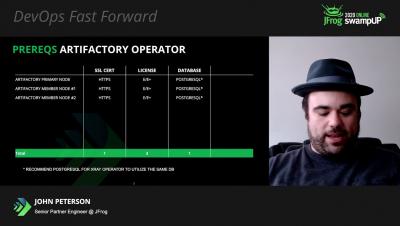
How To Deploy Artifactory via Operator in Openshift - John Peterson, Senior Partner Engineer, JFrog

In this lightning talk you will learn the basics of k8s operators and how they work in the Openshift environment. We will also go over the Openshift Operator Lifecycle and explain the stages and steps that take place to get the operator from the OperatorHub and deploy it into your Openshift environment. A demonstration will be done showing Artifactory being deployed into a new Openshift cluster to provide a learning experience on how Artifactory can quickly and easily be deployed into Openshift. Finally we will have a Q&A session to help answer any questions you may have about the integration and how you can use it.

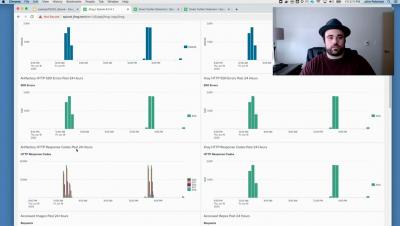
Let's Dive In: JFrog Unified Platform and Splunk - John Peterson, Senior Partner Engineer, JFrog

In our lightning talking will we cover the JFrog Unified Platform integration with Splunk for a wholistic analytics view into the unified platform logs. Combining the two best of breed applications makes tremendous sense for an enterprise without it valuable data insights are lost as well as any action the business might have taken. We will cover how to setup this integration, valuable data insights that can be gained, and how you can extend this integration to discover all new data insights you will wished you always had.

Becoming Hybrid: Operating Your Cloud Environment

It’s a day for celebration! Our migration is complete, and our applications are now running in the cloud environment best suited to their needs. The rest of our application inventory, the ones not cut out for the cloud, remain on-premises where they belong. Actually…we’re not done yet. We still have some work to do to make sure our hybrid environment runs smoothly and delivers the business value we expect. Fortunately, we aren’t the first ones to travel this path.

Stretch Your Reach with Unified JFrog Data and Elastic

DevOps teams rely on Artifactory as the bread and butter tool of universal binary repo managers, but observing its operations can be challenging. With multiple high availability nodes and unification with Xray as the JFrog DevOps Platform, that operations data is spread out across logs for each service in the JFrog Platform deployment. Operations teams need a view into valuable data insights that can only be gained through real time data mining and observation of the platform.

Has your company reached digital maturity?

Do you know what digital maturity is? Do you understand how achieving it can affect your company? Do you know how to detect if you already reached it? Knowing what digital maturity is and the ability to assess it can be essential for a company. In this article we will find out what digital maturity is and see some clues that can indicate the degree of digital maturity a company has. Shall we get started?

Incident Page Updates

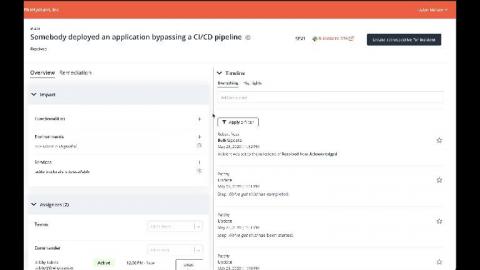
Here at FireHydrant we are always looking for ways to improve and simplify incident management, today we’re happy to announce a set of changes to the incident and retrospective pages to further simplify the incident command center. To make it easier to stay up to date on the status of your incident, we have made the incident timeline permanently viewable on your Incident Command Center. You can adjust the width of your timeline to ensure you can see the most important information at all times.

PagerDuty Integration Updates

In an effort to make it even easier to open incidents, FireHydrant will now let you open an incident from Slack in a single click. When an alert is ingested into FireHydrant a message will post to a channel of your choosing to open an incident. When the incident is opened it will pull in all the data from the PagerDuty alert and configure your incident with that data. Now you can go from an alert firing in PagerDuty to an open FireHydrant incident with all of your automated process in under 5 seconds.

Creating Organizations and Teams and Managing Permissions In Cloudsmith

One reason for building a ‘single source of truth’ for software assets is that it gives the organization control over who can use what when. The ‘wild West’ of public repositories gives no control at all and can lead to a situation in which packages and dependencies of dubious provenance are integrated into builds without a second thought. Within the Cloudsmith world, we want to have the maximum security and control possible.