Operations | Monitoring | ITSM | DevOps | Cloud

How to Choose Quality Commercial and Industrial Insulation

When it comes to commercial and industrial insulation, the choices can be overwhelming. Selecting the right insulation for your specific needs is crucial to ensure energy efficiency, maintain a comfortable environment, and comply with safety regulations. In this comprehensive guide, we'll walk you through the essential factors and considerations you should keep in mind when choosing quality insulation for your commercial or industrial space.


Nanotechnology Breakthroughs and Their Global Impacts

In the vast expanse of technological innovation, where do we stand when things get smaller? Much smaller. We're talking about the realm of nanotechnology - the study and application of extremely small things. Have you ever wondered about the potential impacts of manipulating matter at an atomic or molecular scale? What if these microscopic manipulations could alter the course of our global future? Let's embark on a journey into the intricate world of nanotechnology and assess its breakthroughs and consequent global impacts.

Blue Matador + Squadcast: Alert Routing Simplified

Blue Matador is the fastest, easiest way to set up AWS infrastructure monitoring, allowing small teams to fully monitor their cloud operations with no manual setup. If you use Blue Matador for your cloud monitoring requirements, you can integrate it with Squadcast, an end-to-end Incident Response tool, to route alerts from Blue Matador to the right users in Squadcast with ease.

Ceph storage for Kubernetes

Storage and container management systems are almost polar opposites of each other. One deals with permanently storing, and protecting data for as long as it’s needed. The other automatically manages highly dynamic workloads, scaling resources up and down as required. More organisations are taking a container-first approach to application deployment and management, but the underlying challenge of safely and securely storing data still remains the same.

How do you measure software security maturity?

Scorecards are a Cortex feature that allow you to understand how well your services are doing on the metrics you care about. Scorecards are customizable to your needs, however several are common to most organizations. In our previous post, we shared the top three scorecards that we recommend to Cortex customers. Security maturity is one of the first scorecards we recommend organizations create.

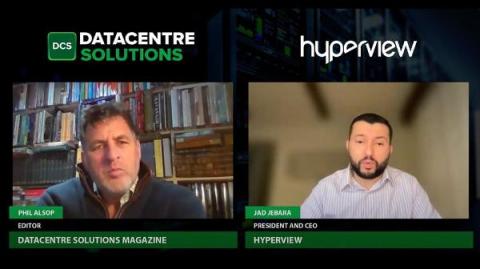
Jad Jebara on Reinventing DCIM: Optimizing Hybrid Infrastructures with Hyperview

In an exclusive Digitalisation World podcast, our CEO, Jad Jebara, delves deep into the ever-evolving hybrid infrastructure landscape. Join us as we explore how companies are strategically optimizing application performance and the infrastructure that fuels their digital ambitions.

See How I&O Leaders Can Monitor Strategy for Their Organizations' Specific Needs

Organizations must always be ready to pivot on a dime and adjust their business goals when the market—or their customers—demand it. Whether driven by industry changes or developments in market trends, when goals shift at the top, the teams who execute against them must follow suit. Since network infrastructure is becoming increasingly complex to fit business needs, IT teams are part of these initiatives.

Why Can't Network Teams Have Nice Things?

Let me tell you something you already know: Networks are more complex than ever. They are massive. They are confounding. Modern networks are obtuse superorganisms of switches, routers, containers, and overlays; a hodgepodge of telemetry from AWS, Azure, GCP, OCI, and sprawling infrastructure that spans more than a dozen timezones.

Connect and Federate Searches Across Your Cloud Data Lakes with Cribl Search

The way we handle massive volumes of data from multiple sources is about to change fundamentally. The traditional data processing systems don’t always fit into our budget (unless you have some pretty deep pockets). Our wallets constantly need to expand to keep up with the changing data veracity and volume, which isn’t always feasible. Yet we keep doing it because data is a commodity.