Operations | Monitoring | ITSM | DevOps | Cloud

Aggregations and Chains: Performance Measurement in Cribl Stream Pipelines

In this post, we’ll discuss two functions in the Cribl Stream arsenal: The Aggregations function, which allows you to perform stats and metrics collection in flight, and the Chain function allows you to call one Pipeline from within another. The event flow will continue when the Chained Pipeline returns. To demonstrate their use, we’ll answer this question: How long did it take for Cribl to process events using your pipeline?

Enterprise vs. SMB IT: What's the Difference?

Enterprises have always had more money to spend on IT than small-and-medium businesses (SMBs). This has traditionally resulted in a disparity in the technology and services available to each. However, with the rise of cloud-based services and the increasing need for remote working, this gap is starting to close. While there are still some differences between enterprise IT management and SMB IT management, the two are becoming more similar.

Splunk Synthetic Monitoring in Splunk Observability Cloud - Product Demo

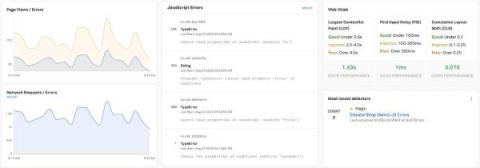
Splunk Synthetic Monitoring is now available in Splunk Observability Cloud allowing IT and engineering teams to proactively detect issues impacting web and API performance and end-user experience and troubleshoot and remediate issues in the web browser, the server, or a third-party dependency—all within a single UI. Watch this quick demo to learn more.

Using Splunk Observability Cloud to Monitor Splunk RUM

As a principal engineer on the Splunk Real User Monitoring (RUM) team who is responsible for measuring and monitoring our service-level agreements (SLAs) and service-level objectives (SLOs), I depend on observability to measure, visualize and troubleshoot our services. Our key SLA is to guarantee that our services are available and accessible 99.9% of the time.

Middleware 101

In computer science, systems are typically divided into two categories: software and hardware. However, there is an additional layer in between, referred to as middleware, which is a software pipeline—an operation, a process, or an application between the operating system and the end user. This article aims to define middleware and reflect on its necessity, as well as address controversies about when and where it applies.

Monitor your Microsoft Azure VMs featuring Ampere Altra Arm-based CPUs with Datadog

As organizations continue to expand their cloud footprint, managing costs without risking application performance is a priority. Because of this, Arm processors have become popular for their efficient, cost-effective processing power. Microsoft Azure’s new series of Azure Virtual Machines are powered by Ampere Altra Arm-based processors, which provide excellent price performance for scale-out and cloud-native workloads.

Simplify IT Management with Hyperconverged Infrastructure

HCI (Hyperconverged Infrastructure) is changing the way businesses work. For starters, the management and deployments become way simpler with HCI solutions. But that is only the start; proper resource utilization, demandable scalability, exceptional data protection, and so on, the benefits associated with HCI solutions are numerous. But what are HCI solutions? And how the HCI Hyperconverged Infrastructure simplifies IT management. Well, find out answers to these and many more questions related to HCI solutions in this no-bullshit guide.