Operations | Monitoring | ITSM | DevOps | Cloud

The Place Where Modern Operations & Technology Come Together



AI, Platforms, and the Future of Value Delivery: A Conversation with ServiceNow
How do enterprises turn AI from experimental potential into real-world software delivery value — without slowing down, breaking security, or sacrificing reliability? At {unscripted} 2025, Amit Zavery — President, Chief Product Officer, and COO of ServiceNow — joined Harness CEO and Founder Jyoti Bansal for a candid fireside chat on the future of AI in the enterprise, the role of platforms in unlocking developer productivity, and why"AI-native" only works when speed, security, and reliability move together.
The "Free" AI Tool That Will Ruin Your Code#speedscale #aiagents #aicoding #devops #softwareengineer
Relying on AI and interns to build custom traffic replay tools is a scalability nightmare that introduces security risks, brittle code, and massive maintenance costs...use Speedscale instead. Learn more: speedscale.com.

When your agents hallucinate at 2 am, it is not a model problem
The first time an AI assistant suggests "restart the service" during a live incident and nobody on the bridge can tell whether that suggestion came from a current runbook, a stale wiki page, or thin air, you stop caring about model benchmarks. You start caring about what the agent actually knew, where that knowledge came from, and whether you can trust the chain of reasoning behind it.
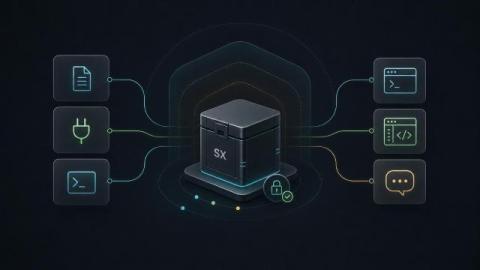
There's an npm-shaped hole in the AI tooling stack
I've had this same conversation with 60+ engineering teams in the last six months. A team adopts AI tooling. One developer figures out how to use it well, builds up a vault of skills, MCP configs, and slash commands that 10x their output. The rest of the team has whatever they can scavenge from a shared Notion doc.

Why agentic AI development needs reliability guardrails
AI has massively accelerated code deployment. In fact, since the introduction of agentic coding, GitHub has seen exponential growth in PRs, commits, and new repos. What they originally predicted would require 10X capacity, they’re now estimating it’s going to require 30X capacity, and the biggest driver is agentic development. Companies across industries are building agentic pipelines to ship features faster than ever before. That acceleration isn’t without risk.

Anthropic Shipped An Enterprise Analytics API. We Shipped the Claude Adapter Today.
Anthropic just shipped an Enterprise Analytics API with user-level token and cost data. Today, we're shipping the CloudZero adapter that maps that data to teams, budgets, and cost centers — so Claude spend gets the same accountability as the rest of your stack. Anthropic released the first beta of its Enterprise Analytics API this week. Admins can pull token usage and dollar cost through a programmatic endpoint, broken down by user, model, context window, region, and product surface.

Finding the blind spot: How Canonical hunts logic flaws with AI
The recent unveiling of Anthropic’s Claude Mythos preview has radically shifted the cybersecurity landscape. We are now in an era where AI can autonomously discover and exploit zero-day vulnerabilities in mature codebases at machine speed.

Why Network Operations Needs Data-Centric AI
The discussion around AI in infrastructure and operations has become increasingly model-centric. Teams want to know what model a platform uses, how current it is, how much reasoning capacity it has, and how quickly it can be updated as the model landscape shifts. Those are reasonable questions, but they tend to arrive too early. In production operations, the more consequential question is what happens to the data before any model is asked to interpret it.