Operations | Monitoring | ITSM | DevOps | Cloud

AI writes the code. Who delivers it safely? | Harness Blog

The question for enterprise AI in 2026 is no longer just which model. It’s which harness. An agent harness is the system around the model. It decides what the agent remembers, what context it sees, what tools it can call, what it is allowed to do, and what happens when it is wrong. The model provides intelligence. The harness provides control. This is where the real engineering is happening.

From PR to Production Without Leaving Your Cursor IDE | Harness Blog

TLDR: Today, Harness is introducing the Harness Cursor Plugin, bringing the power of the Harness AI-native software delivery platform directly into Cursor. This integration, along with the Harness Secure AI Coding hook for Cursor, allows developers and AI agents to move from code changes to vulnerability detection, CI/CD execution, security validation, approvals, deployments, and operational insight without leaving the editor. AI has completely changed how we write code.

7 best AI deployment platforms for production Kubernetes workloads in 2026

Training a model in a notebook is easy. What breaks teams is the step after, serving it reliably without haemorrhaging cloud budget or burying your SREs in YAML. The common trap: picking a platform that handles the model but not the surrounding stack. An AI deployment platform should orchestrate the full application graph (inference endpoints, vector databases, caching layers, and frontends) inside a single VPC, with GPU autoscaling that doesn't require a dedicated platform engineer to babysit.

How to use an SRE agent to reduce downtime

An alert in the middle of the night warns of a potential business failure. Manual incident response becomes more complex due to the overwhelming data from distributed and dynamic digital services. With an SRE agent, your engineering team can cut through alert clutter. They can sort through various signals quicker, decreasing burnout and achieving faster, more affordable resolutions. Operational resilience will see its next evolution with Agentic AI.

Detect, Communicate, Resolve: Checkly's Agentic Workflow End-to-End

Coding agents are the fastest-growing audience for the Checkly CLI, and we're doubling down on them. In this session, Stefan hands Claude a real e-commerce app, lets it set up monitoring with `npx checkly init`, generate Playwright tests through MCP, and walk an actual alert end-to-end with Rocky AI in the loop.

Faster fixes, less context sharing: how Grafana Assistant learns your infrastructure before you even ask

When an unexpected alert fires these days, most engineers' first move is to ask their AI assistant for help.You ask why your checkout service is slow and the assistant gets to work, but it can't get any meaningful insights—at least not quickly—without the proper guidance. So, the next thing you know you're sharing deals about your existing data sources, the services you have running, how they connect, which labels and metrics matter, and on and on.

Why dashboards still matter in the age of AI

I recently gave a talk at Experts Live India 2026 about SquaredUp, and even before getting into the demo, there was one question I knew I had to address: Is the dashboard era over? It's something we're all hearing more. "Just ask AI." "Agentic AI will build your dashboards automatically." "Why bother with static views when a chatbot can answer anything?" It's a fair question. Answering it requires a clear understanding of what a dashboard represents.

Context Engineering: How to Manage AI Context at Scale

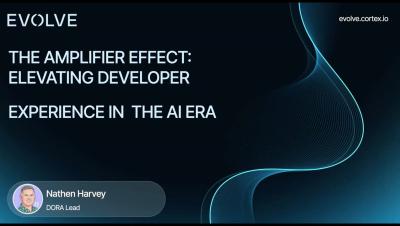
Context engineering is the practice of managing the information an AI model sees (documents, tool outputs, memory, and structured metadata about the systems it reasons over) so it can make accurate decisions inside a real engineering organization. Most engineering teams have access to the same AI coding agents: Claude, GPT, Gemini, the major variants everyone is shipping. The model is no longer the differentiator.