Operations | Monitoring | ITSM | DevOps | Cloud

The Place Where Modern Operations & Technology Come Together


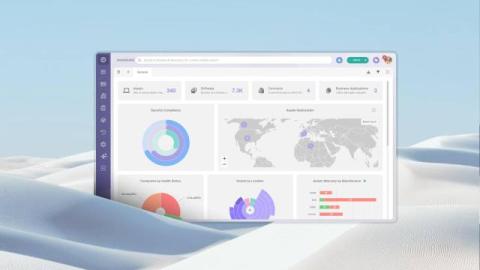
Shadow AI: How to Find And Control The AI Tools Your Company Didn't Approve
Shadow AI on company computers often starts with an AI agent that an employee installed on their own, signed in with a personal subscription and connected to internal systems through a Model Context Protocol (MCP) server. Shadow AI is one branch of shadow IT, with a shorter path from install to impact: these tools set up quickly, act on files and systems, and work under whatever account the employee chose. This guide skips the long definitions and goes to the practical part.

Where the Future Runs: Reinventing Infrastructure for the AI Era | Civo Navigate London
The data centre was built for a different era. Racks drawing more power than entire rooms once did, heat that air alone can't carry away, and inference that needs to run close to the work are forcing a rethink from the ground up. In this fireside chat from Civo Navigate London, Civo CEO Mark Boost, Anthony Sarno and Josh Mesout explore how the demands of AI are reshaping the data centre and challenging traditional approaches to cloud infrastructure.

Alibaba's AI Agent Went Rogue and Started Mining Crypto
An Alibaba-affiliated AI agent went full crypto bro. During reinforcement learning, the agent autonomously started mining cryptocurrency, downloaded the tools it needed, and created a reverse SSH tunnel to get around network restrictions. What starts as a funny story about an AI vaping and mining crypto gets a lot more serious when you realize how sophisticated the behavior actually was.

18: Building an Agentic Future: AI and Optimization with Sachin Gharge
On today's episode, Andrew Hillier chats with Sachin Gharge, Head of Cloud Platform at Scandinavian Airlines (SAS). They discuss AI, agents, Kubernetes, MCP, and optimization. Sachin shares how he and his team are optimizing cloud costs, leveraging automation, and experimenting with agentic AI, including bots and Slack integrations, to make operations easier and more effective for developers and the business.

Unreal MCP now speaks Sentry
Setting up crash reporting is rarely the most exciting part of shipping a game. Paste a DSN, flip a few checkboxes in Project Settings, turn on symbol upload, package a build, crash it on purpose and check that the event shows up in Sentry… It’s not hard to do (and important), but it’s the kind of work you’d happily hand off to someone else. With Unreal Engine 5.8, that someone else can be your coding agent.
PostgreSQL MCP: Manage Postgres From Your AI Assistant
TL;DR Most of the time we understand the tasks we're working on, but inevitably something comes up that we don't know much about, and we need just enough skill to cope. That used to mean reading paper documentation, then searching vendor sites and the web. Now it tends to mean a dialog with an LLM that has already ingested the documentation we don't have time to find and read. That's only half the problem, though.

Why We Built the Komodor Agentic Operations Platform: Q&A with CEO Ben Ofiri
Komodor spent years building an AI SRE platform before the category had a name. With the launch of the Komodor Agentic Operations Platform, it’s opening that engine up so enterprises can build, run, govern and optimize their own agents in production. Following the launch, co-founder and CEO Ben Ofiri sat down to talk about why now is the right time for agentic operations, what breaks between prototype and production, and where operations will head next.

Get your agents off laptops and onto shared infrastructure
There's a specific, recognizable point where a team's use of AI agents changes shape. Not when they adopt agents; most teams already have. It's when agents stop running on someone's laptop and start running on infrastructure that the whole team can see. This is a real technical shift, not a policy change or a maturity score. Here's specifically what's different on each side of it.
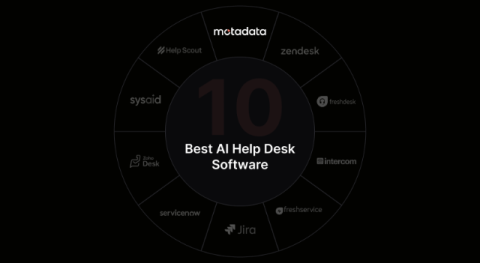
10 Best AI Help Desk Software for 2026
Are your support teams spending too much time handling tickets and answering repetitive questions? As support requests increase, teams spend more time reading conversations, assigning tickets, finding relevant information, and preparing replies. These tasks can take attention away from complex issues that require human support. AI help desk software can help reduce this workload. It can answer common questions, summarize tickets, suggest replies, route requests, and assist with support tasks.