
Operations | Monitoring | ITSM | DevOps | Cloud

What Does AI Need to Know Before You Trust It? | AI SREDo you like this personality?

AI can make decisions. But can it make the right ones across your entire IT environment? For enterprise SRE teams, trustworthy AI requires three things: operational context, institutional memory, and guardrails. Without them, autonomous action becomes a risk instead of an advantage. In our latest webinar, we explore what it takes to bring AI SRE capabilities to enterprise scale.
Meet Loom

When something breaks on a large network, the alerts arrive from every direction. Routers, firewalls, cloud gateways, and applications each report their own symptoms. The evidence that explains the incident is scattered across anomalies, configuration changes, topology, and past incidents, and an engineer has to piece it together by hand. Loom is the correlation and root cause agent in Selector Foundry, the agentic NetOps platform built on Selector’s existing AIOps and Observability platform.

Why 76% of AI agent pilots stall, and how your Agentic ITOps pilot can avoid the same fate

The debate is no longer whether AI belongs in ITOps; it’s about how quickly it can be implemented, how to measure it, and who’s accountable when it acts. And although IT leaders across industries are scrambling to integrate agentic AI into their operations, those deployments are facing serious challenges. A new Harris Poll survey of more than 300 U.S. data and AI decision-makers puts a number on the problem.

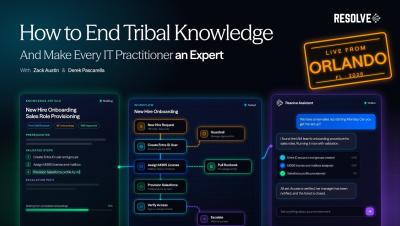
How to End Tribal Knowledge and Make Every IT Practitioner an Expert

Every IT organization has a small group of people who hold the answers everyone else depends on, and that dependency carries a cost that never appears on a dashboard. It shows up in constant interruptions, on-call rotations that keep routing back to the same names, investigations rebuilt from scratch every time an incident resurfaces, and the pressure carried by the one person who knows how the environment behaves under stress.

Meet Artist

Every network team keeps a dashboard backlog. A war room needs a view of one incident. A service owner wants path health for a single application. An executive review needs business impact on one page. Each request becomes a ticket for the tooling team, and the view often arrives after the moment that needed it has passed. Artist is the dashboard agent in Selector Foundry, the agentic NetOps platform built on Selector Analytics.

BigPanda has been recognized as a Niche Player in the 2026 Gartner Magic Quadrant for AI Applications in IT Service Management report

On August 17, Gartner placed BigPanda in the Niche Players quadrant of the 2026 Gartner Magic Quadrant for AI Applications in IT Service Management (ITSM). It’s our first time on this MQ, after an honorable mention last year. I’m glad we’re there, and I want to explain why a company that doesn’t sell an ITSM platform reads that as a strong result.

When five agents are looking at the same IT incident, which one makes the decisions?

It’s 2:14 am, and checkout latency at your largest retail store has tripled. Your observability platform’s agent has already posted to Slack that there is a connection pool exhaustion on the orders database, with a link to the trace. Your cloud provider’s agent reports a degraded network path in one availability zone. The AI SRE tool one of your product teams adopted last spring points to a deploy that went out at 1:50.

What Is IT Change Management? Process, Types, and Best Practices

Last updated: Oct. 15, 2026 IT environments change constantly. The challenge is making those changes without creating unnecessary risk, outages, or delays. IT change management, called Change Enablement in ITIL 4, helps teams assess, authorize, implement, validate, and learn from changes that could affect an IT service. The goal is not to slow delivery. It is to improve change success while reducing disruption, recovery time, compliance risk, and impact on critical business services.

Vulnerability Management and the Risk You Cannot Patch This Weekend

✓ operational truth Operational risk is no longer limited by the ability to find vulnerabilities. It is limited by the ability to prioritize them by business exposure and to act on the large share that cannot be patched at all. Autonomous IT changes this by mapping findings to applications and owners, automating the work around the patch, and proposing evidenced mitigations where no patch exists.

How Configuration Monitoring Helps Detect Zero-Day Activity

Last updated: October 9, 2026 A zero-day vulnerability may be unknown, but its effects often are not. Exploitation can leave behind observable changes: a new privileged account, an altered management setting, an unexpected file, a modified access rule, or configuration drift from an approved baseline. That makes zero-day configuration monitoring an important part of a defense-in-depth strategy.

Meet Rosetta

During an incident, the answers an engineer needs are spread across tools. Telemetry sits in one place, configurations in another, and tickets in a third. Building a complete picture means knowing which tool holds which piece and how to query each one, usually under time pressure. Rosetta is the conversational interface for Selector Foundry, the agentic NetOps platform built on Selector’s existing AIOps and Observability solution.

Building Reliable IT Infrastructures

Downtime is expensive, and it’s getting harder to avoid. Every year, enterprise IT environments grow more distributed, dynamic, and difficult to maintain with legacy tools and manual processes. With unplanned outages costing enterprises nearly $25,000 per minute, establishing and maintaining a resilient IT infrastructure is essential. Enterprises have already invested heavily in resilient architecture.

Event Intelligence and the Diagnosis Gap: When Logs Are the Only Witness

✓ operational truth Incident diagnosis is now the longest phase of resolution because evidence is fragmented, expertise sits with a few people, and cloud and SaaS estates no longer allow engineers to log in and look. Event Intelligence closes the gap by correlating events into a single probable cause, mining logs automatically, and arriving at the incident with a hypothesis already formed.

How ScienceLogic Helps Federal Skylar One Customers Move to FIPS 140-3 Without Disrupting Operations

ScienceLogic provides federal Skylar One customers with a supported Oracle Linux 9 direction, deployment-specific migration workflows, validation gates, and clear ownership before Oracle Linux 8 is retired.

Observability vs Monitoring: Why Does IT Still Find Out After the Business Does?

✓ operational truth IT finds out late because traditional monitoring is built to detect what goes wrong, not what has quietly stopped happening. Closing that gap requires observability that validates business journeys end to end, detects missing activity, checks its own coverage, and predicts degradation before a threshold is ever crossed.

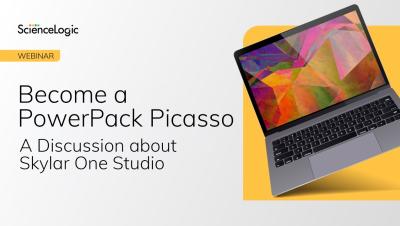
Become a PowerPack Picasso: A Discussion About Skylar One Studio

If Sklyar One is your canvas, then Skylar One Studio is where you develop your art. In this session, we’ll dive into the latest tools that allow you to quickly and easily build new PowerPacks. You’ll learn how to build beautiful PowerPacks, without having deep Python knowledge, which work quickly, have great performance, are secure, and easy to support; all thanks to the extensibility of ScienceLogic tools using the latest and greatest innovations in content development. Your next masterpiece is at your fingertips!

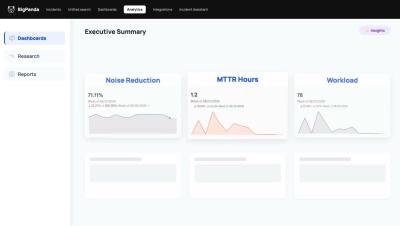
BigPanda Analytics: AI-driven insights and faster answers across all your ITOps data

See how BigPanda Analytics turns IT operations analytics into instant answers, no hand-built reports required. IT leaders are used to waiting on a report someone on the ops team had to hand build, and every follow-up question starts the cycle over again, while the business keeps moving. This demo shows how IT executives get direct access to IT operations analytics: prebuilt dashboards, AI-powered insights, and a natural language research tool that answers questions in real time.