Cloud Cost Optimization with NTT DATA & Densify
Cloud costs are creating budget challenges for many organizations. Watch this 15-min session to hear from NTT DATA and Densify to learn how large enterprises have.


The latest News and Information on Containers, Kubernetes, Docker and related technologies.
As an open-source container management system, the Kubernetes (commonly referred to as K8s) platform’s constant growth warrants an intricate cluster network, making it challenging to gain system-wide visibility. Even a tiny disruption within the network could collapse the entire operation, resulting in the failure of dependent applications. Businesses that rely on such containerized applications may experience a huge impact in revenue.
Nowadays, when most people think about the term “machine learning,” they think of advanced, refined applications such as Chat-GPT, the chatbot-based deep learning text generator, or AlphaGo, the computer program that’s currently the “world's best player” of the board game Go.
The default pod provisioning mechanism in Kubernetes has a substantial attack surface, making it susceptible to malevolent exploits and container breakouts. To achieve effective runtime security, your containerized workloads in Kubernetes require multi-layer process monitoring within the container.
Content As we already discussed in previous articles, the Kubernetes control plane is made up of a few key components playing different roles. Those are necessary to ensure both Kubernetes and applications are functional and behaving properly.
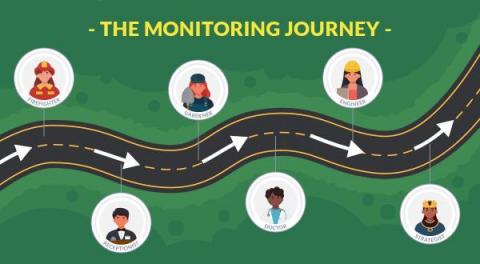
Monitoring is not a goal, but a path. Depending on the maturity of your project, it can be labeled in one of these six steps of the cloud monitoring journey. You will find best practices for all of them and examine what companies get from each one. From classic virtual machines to large Kubernetes clusters or even serverless architectures, companies have adopted the cloud as a mainstream way to provide their online services.