The latest News and Information on Containers, Kubernetes, Docker and related technologies.
It's impossible to learn about containerization without hearing about Docker and Kubernetes. These two tools together dominate the world of containers, both being the de-facto standard in what they each do. When you're first getting started learning about containers, it can be quite a challenge to figure out what the differences are between these two tools.
Last May, KubeCon gathered multiple tech enthusiasts, students, professionals, and companies. The event highlighted various topics and insights on how to collaborate on pushing the boundaries of cloud-native computin One of our Engineering Directors, Mykola Marzhan, shared his knowledge about databases on Kubernetes at KubeCon, during a session organised by the DoK.Community. We’ve picked out some of the key highlights from the talk below.
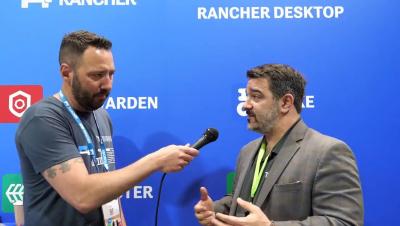
In addition to the usual updates to supporting utilities, Rancher Desktop 1.4 adds a couple of new useful features we think you’ll like.
Project Calico has offered a production-ready data plane based on eBPF since September 2020, and it’s been available for technical evaluation for even longer (since February 2020). The pre-requisites and limitations are simple to review, it’s easy to enable, and it’s easy to validate your configuration. So, there’s never been a better time to start experiencing the benefits! You do know what those are, don’t you? Don’t worry if not!
Lineage to the saying “canary in a coal mine”, the canary deployment/release methodology is an incremental release focused on safety. If the canary does not pass, the deployment does not continue or is rolled back. Taking a jog down memory lane, like Kubernetes the Hard Way, a few years ago a canary deployment in Kubernetes was quite the undertaking.
In this article, we will analyze some new features and the impact they might have on the Prometheus community. Here’s our editor’s pick.