Operations | Monitoring | ITSM | DevOps | Cloud

The latest News and Information on Containers, Kubernetes, Docker and related technologies.

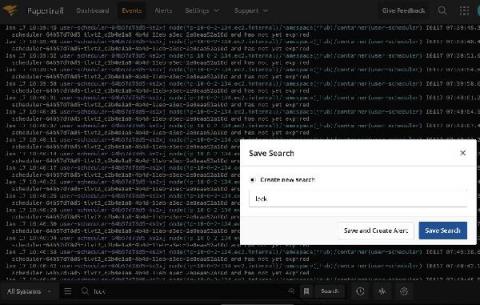
Aggregating Application Logs From EKS on Fargate

Today we’re going to talk about logging with Kubernetes on AWS using CloudWatch and SolarWinds® Papertrail™. We’ll cover setting up Papertrail, installing and configuring the rKubeLog package, viewing the logs in the Papertrail event viewer, and cross-checking those logs with the ones we see with kubectl. From there, we’ll set up a few different alerts.

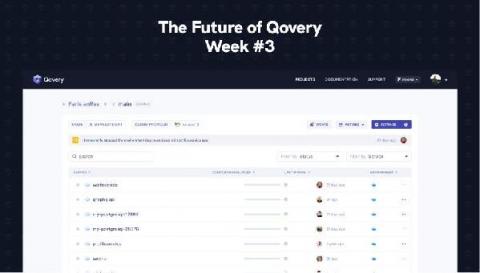
The Future of Qovery - Week #3

During the next eight weeks, our team will work to improve the overall experience of Qovery. We gathered all your feedback (thank you to our wonderful community 🙏), and we decided to make significant changes to make Qovery a better place to deploy and manage your apps. This series will reveal all the changes and features you will get in the next major release of Qovery. Let's go! Read the previous article: The Future of Qovery - Week #2.

VirtualMetric Webinar Cloud Native Applications on VMware & Kubernetes

In this webinar, Yusuf Ozturk hosted Lino Telera to speak about Cloud-Native Applications on VMware & Kubernetes. You will learn about Kubernetes, the ways to deploy it, get CI/CD Pipeline example and even see a Live Demo. Speaker: Lino Telera, Cloud Architect at InfoCert S.p.A and Blogger at blog.linoproject.net, Cloud-Native Coach, 7 x vExpert and VMUG leader. What does it mean to build and deploy Cloud-Native Application today? Introduction to Kubernetes.

Rancher Online Meetup - March 2021 - Rancher KIM

Introducing Rancher KIM, the Kubernetes Image Manager. KIM is a proper Kubernetes client that installs and manages the back-end services required to support its focus on delivering a `docker build` (and related image management) compatible experience to your development workflow. This means you can download the KIM executable for your client platform and run `kim build --tag your/image:tag .`, just as you would invoke `docker build`, and have the image immediately available on your single-node K3s cluster. There's no need to push the image to an external repository nor export it to a tarball and then import it into K3s containerd.

Honeypods: Applying a Traditional Blue Team Technique to Kubernetes

The use of honeypots in an IT network is a well-known technique to detect bad actors within your network and gain insight into what they are doing. By exposing simulated or intentionally vulnerable applications in your network and monitoring for access, they act as a canary to notify the blue team of the intrusion and stall the attacker’s progress from reaching actual sensitive applications and data.

ECS Fargate threat modeling

AWS Fargate is a technology that you can use with Amazon ECS to run containers without having to manage servers or clusters of Amazon EC2 instances. With AWS Fargate, you no longer have to provision, configure, or scale clusters of virtual machines to run containers. This removes the need to choose server types, decide when to scale your clusters, or optimize cluster packing. In short, users offload the virtual machines management to AWS while focusing on task management.

Kubernetes Master Class - Thanos and Istio

Rancher simplifies the deployment and management of monitoring (Prometheus) and observability (Istio) on a cluster to cluster basis. Each of these tools have extensions that allow for global view and global access. With the recent introduction of Fleet, Rancher 2.5 has reduced the barrier to entry for these configurations, making them available to organizations running at any scale.