Operations | Monitoring | ITSM | DevOps | Cloud

The latest News and Information on DevOps, CI/CD, Automation and related technologies.

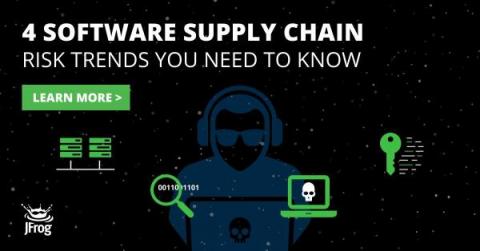
The Software Supply Chain Risks You Need to Know

Code that an organization’s developers create is only the beginning of modern software development. In fact, first-party code is likely to be only a small proportion of an application – sometimes as little as 10% of the application’s artifact ecosystem. An enterprise’s software supply chain is made of many parts, from many sources: open source packages, commercial software, infrastructure-as-code (IaC) files, and more.

Automate deployment of React applications to Firebase

Many platforms offer free hosting services for React and other JavaScript frameworks. These frameworks can be used for building single-page applications, which is handy when you need to launch a minimum viable product or a quick proof of concept. Your fellow developers are taking advantage of these tools, and you can too. To narrow down options, I will focus on Firebase in this tutorial.

Data Collection Strategies for Infrastructure Monitoring - Troubleshooting Specifics

Monitoring and troubleshooting; unfortunately, these terms are still used interchangeably, which can lead to misunderstandings about data collection strategies. In this article we aim to clarify some important definitions, processes, and common data collection strategies for monitoring solutions. We will specify the limitations of the described strategies, as well as key benefits which can potentially be also used for troubleshooting needs.

Why you need an incident timeline

We get it – incidents happen. What differentiates resilient teams from others is how they learn from them: using them as an opportunity to find the biggest improvements in how they work. Incident timelines are one of the most simple and effective tools available to you when it comes to learning from an incident. It’s vital that you ensure they’re accurate and useful, in order to make the biggest improvements after an incident.

Best practices to publish open-source software operators

Running or operating applications requires several tasks throughout their lifecycle: scaling instances, checking the health, integrating with other applications, running backups, and applying updates – to name a few examples. It’s a time and labour-intensive process. To automate these tasks, developers can implement scripts for repeated execution. This is where the software operator comes in.

7 Critical Considerations for Evaluating Infrastructure Monitoring Platforms

I remember how excited I was to build my first Network Operations Center (NOC). It was a new idea at the time (yes, I know I’m dating myself), and boy, did we feel like we were cutting edge. The mere idea that we needed a place and a set of tools to monitor our entire infrastructure (because it’s never really been about just the network) was a big transition at the time. How things have changed.

7 Common Kubernetes Pitfalls

Kubernetes is the industry's most popular open-source platform for container orchestration. It helps you automate many tasks related to container management. Companies use it to solve their problems related to deployment, scalability, testing, management, etc. However, Kubernetes is complex and requires a steep learning curve. In this article, we will go through some common Kubernetes pitfalls most companies fall to.