Operations | Monitoring | ITSM | DevOps | Cloud

The latest News and Information on DevOps, CI/CD, Automation and related technologies.

Two-factor authentication coming to Ubuntu One

Two factor authentication (2FA) increases your account security further than just using a username and password. In addition to a password (the first factor), you need another factor to access your account. A great example to demonstrate this is when you withdraw money from an ATM. To access your bank account you need both your physical bank card and to know your PIN number. These are the two factors you need to withdraw money = 2 factor authentication!

Leaping Forward With Our Partners: JFrog Unveils Tech Partner Program

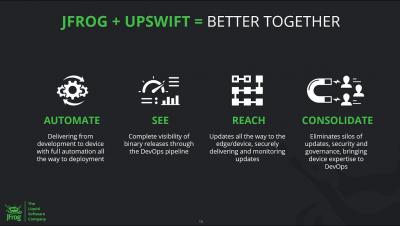
We’re delighted to announce the freshly-updated JFrog Technology Partner Program, a powerful initiative that will elevate our already large and vibrant ecosystem of integration partners and strengthen JFrog’s “too integrated to fail” commitment to its customers and the DevOps community. The program is a natural next step for JFrog.

Joe Biden's Security Order: What it Means for DevOps

What the Executive Order says today Anticipated further actions by the White House Reasons the software bill of materials (SBOM) will become the source of truth Differences between a SBOM and an “ingredients list” How tools and methods will position developers for success How securing and certifying processes - not just components - may be the key to future compliance

Ribbon IP and Optical Solutions for Research and Education Networks RENs

National and regional research and education networks are strategic assets that bolster economic competitiveness and are also a showcase of high tech excellence. Ribbon has a record of accomplishment worldwide implementing RENs, from national to regional RENs, as well as smaller university networks. Ribbon’s REN solution encompasses a flexible high bandwidth optical backbone, IP connectivity, management and automation, as well as value-added communications services.

Using the Redis Command-Line Correctly

Redis is an open-source in-memory data store. You can use Redis as a database, message broker, or cache. It also supports Lua script evaluation so you can build automation scripts or custom operations on top of your key-value Redis store. Typically, developers use language-specific client libraries when building apps with Redis. These clients abstract Redis’ command-line interface (CLI), making it easier to work with but more work to set up.