Operations | Monitoring | ITSM | DevOps | Cloud

The latest News and Information on DevOps, CI/CD, Automation and related technologies.

6 Critical Requirements for Effective Application Infrastructure Monitoring

The cloud gets all the press today, and while organizations are moving more and more of their applications and associated infrastructure into the cloud, there is still a lot of “down below” on-premises. A recent cloud computing survey from IDG shows that a clear majority of companies plan to use cloud services for over half of their infrastructure and applications.

DevOps and the Cloud: 5 Ways DevOps And the Cloud Will Come Together in 2020

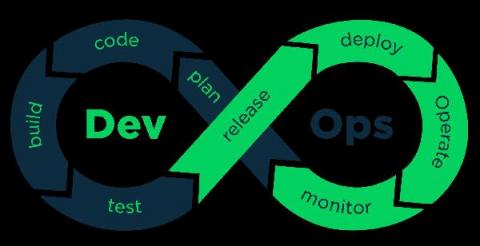
More and more companies are beginning to turn to DevOps and the cloud as a way to improve their software teams. Whilst it used to be that development and operations were seen as separate, that view has now changed. Linking the two leads to better communication, faster development times, and the ability to stay on top of things.

Enhancing the DevOps Experience on Kubernetes with Logging

Keeping track of what’s going on in Kubernetes isn’t easy. It’s an environment where things move quickly, individual containers come and go, and a large number of independent processes involving separate users may all be happening at the same time. Container-based systems are by their nature optimized for rapid, efficient response to a heavy load of requests from multiple users in a highly abstracted environment and not for high-visibility, real-time monitoring.

Implementing infrastructure as code with Ansible

If you’re here, it means that your application is a hit, coming through a long way of development and deployments. Your application is finally in a stage where you or your team need to set up more servers than you can handle manually, and you have to provision them fast. There’s also the need to make sure that all of them have the same configuration, packages, and versions in order for your application to have the same behavior in all of them.

Building and deploying a Docker image to a Kubernetes cluster

Deploying Docker images to Kubernetes is a great way to run your application in an easily scalable way. Getting started with your first Kubernetes deployment can be a little daunting if you are new to Docker and Kubernetes, but with a little bit of preparation, your application will be running in no time. In this blog post, we will cover the basic steps needed to build Docker images and deploy them to a Kubernetes cluster.

Essential Observability Techniques for Continuous Delivery

Observability is an indispensable concept in continuous delivery, but it can be a little bewildering. Luckily for us, there are a number of tools and techniques to make our job easier! One way to aid in improving observability in a continuous delivery environment is by monitoring and analyzing key metrics from builds and deploys. With tools such as Prometheus and their integrations into CI/CD pipelines, gathering and analysis of metrics is simple. Tracking these things early on is essential.

Track, Debug, and Fix Errors with Sleuth and Sentry

Learn how the Sleuth-Sentry integration gives you a complete view into your deployment tracking and health! Join us for a virtual webinar with Sleuth co-founder Don Brown and Sentry Product Marketing lead Rahul Chhabria as we walk you thru the benefits of the integration and the insights the combined solution will bring you.

Achieving CI Velocity at Tigera using Semaphore

Tigera serves the networking and policy enforcement needs of more than 150,000 Kubernetes clusters across the globe and supports two product lines: open source Calico, and Calico Enterprise. Our development team is constantly running smoke, system, unit, and functional verification tests, as well as all our E2Es for these products. Our CI pipelines form an extremely important aspect of the overall IT infrastructure and enable us to test our products and catch bugs before release.

Exploring AWS Lambda Deployment Limits

We have explored how we can deploy Machine Learning models using AWS Lambda. Deploying ML models with AWS Lambda is suitable for early-stage projects as there are certain limitations in using Lambda function. However, this is not a reason to worry if you need to utilize AWS Lambda to its full potential for your Machine Learning project. When working with Lambda functions its a constant worry about the size of deployment packages for a developer.